Personalized Medical Care & Dedicated International Patient Concierge

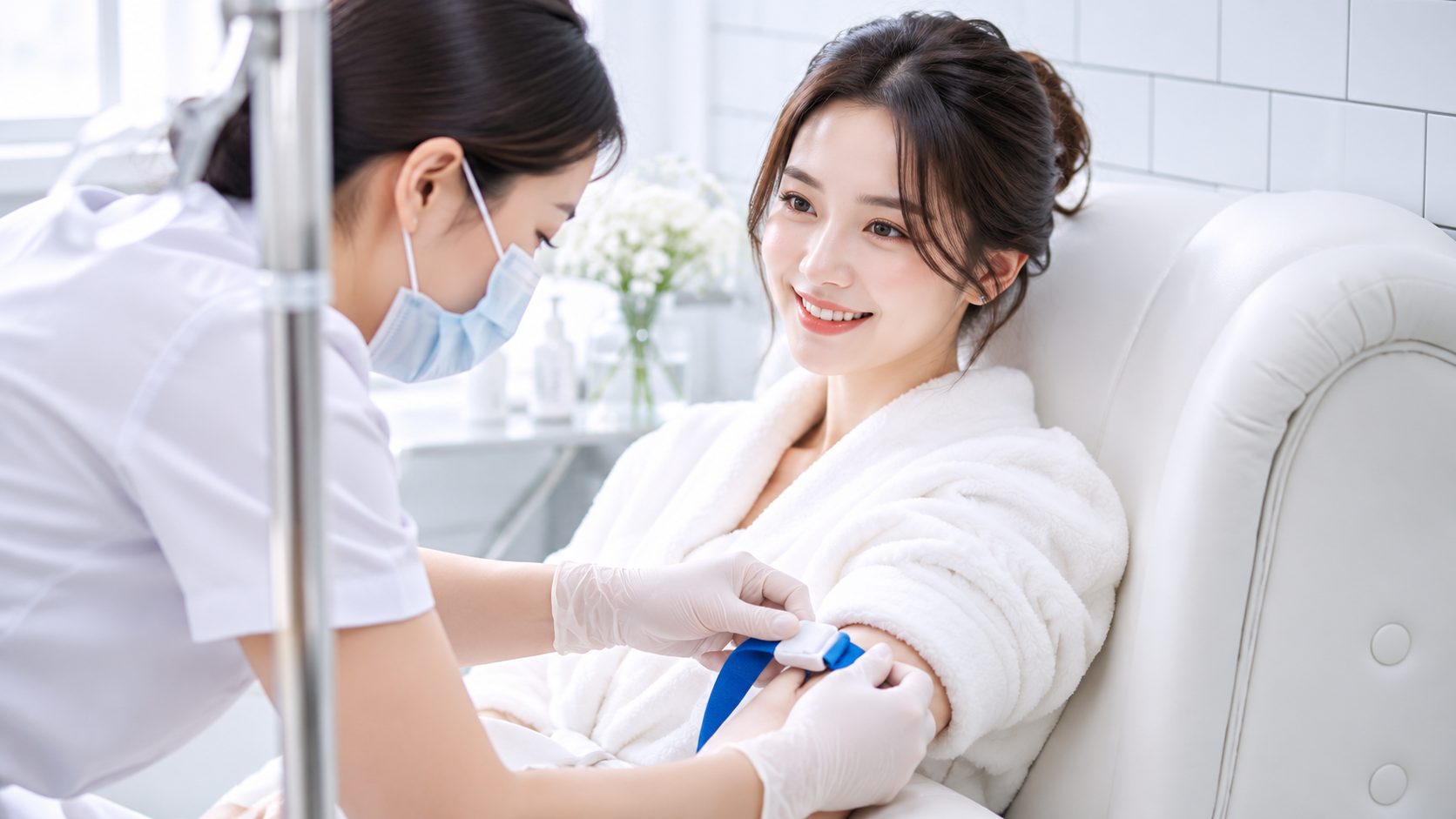
IV Therapy & Vitamin Injections · Needs Clinic Confirmation
General IV Drips
General IV drips in Seoul are treatments at SeoJeong Dermatology in Seocho-gu in which fluids, electrolytes, vitamins, minerals or other prescribed substances are administered directly into a vein through an intravenous line.
Schedule a ConsultationGeneral IV Drips
Medically reviewed by Dr. Lee Jiyoung, Board-Certified Dermatologist
General IV drips in Seoul are treatments at SeoJeong Dermatology in Seocho-gu in which fluids, electrolytes, vitamins, minerals or other prescribed substances are administered directly into a vein through an intravenous line. The ingredients and dosage depend on the patient's health status, symptoms, nutritional needs and medical assessment — and not every patient requires IV therapy.
What Is a General IV Drip?
An infusion is a route of administration, not a treatment in itself. What it achieves depends entirely on what is in the bag and whether the patient needed it.
Fluids, electrolytes, vitamins, minerals or other prescribed substances are delivered directly into a vein.
Equipment may include a sterile IV catheter, infusion tubing, an IV fluid bag, and an infusion pump or drip regulator, with vital-sign monitoring where appropriate.
An appointment may take approximately 30 to 90 minutes, though some formulations require longer.
The total visit also includes consultation, preparation and post-infusion monitoring.
Benefits depend on the ingredients and the patient's needs, and are not guaranteed.
The clinic's approved description is correspondingly precise: general IV drips deliver prescribed fluids, electrolytes or nutrients directly into a vein when clinically appropriate; treatment should be administered by qualified medical professionals following an assessment of suitability; and risks such as infection, vein irritation or fluid-related complications may occur.
The starting point for any nutrient question is the ordinary one. The NHS states that vitamins and minerals are nutrients the body needs in small amounts to work properly and stay healthy, and that most people should get all the nutrients they need by having a varied and balanced diet, although some people may need to take extra supplements. An infusion makes sense where that ordinary route is inadequate or unsuitable — not as a substitute for it.
Who Performs General IV Drips at SeoJeong Dermatology

Dr. Lee Jiyoung
Board-certified Dermatologist
Assessment and treatment are carried out by Dr. Lee Jiyoung, Chief Director of SeoJeong Dermatology and a board-certified dermatologist in South Korea with more than 20 years of clinical experience. Her medical education and her dermatology specialist training were both completed in South Korea, and she holds an ECFMG certificate.
A healthcare professional reviews medical history, symptoms, medications, allergies, hydration status and treatment goals; a physical examination and laboratory tests may be recommended where clinically indicated; and the clinician then determines whether IV therapy is appropriate, selects the formulation and dosage, explains potential risks and discusses alternative treatments. The clinic's related injectable services are described on the IV Therapy & Vitamin Injections page.
Before establishing the clinic in April 2022, she was Director at Cheongdam Lee Ji-ham Dermatology Clinic, at B&C Dermatology Clinic's Gangnam branch, and at CU Cleanup Dermatology Clinic's Yeongdeungpo branch. She is a regular member of the Korean Dermatological Association, the Korean Association of Dermatologists, the Korean Academy of Anti-Aging Dermatology, the Korean Acne Society, and the Korean Atopic Dermatitis Association. SeoJeong Dermatology is a single-physician clinic, and a dedicated global coordinator supports international patients with English-language communication.
Treatment is carried out under the direction of Dr. Lee Jiyoung; this page does not claim that one specific doctor personally performs every session of this service.
Who Is a Good Candidate for a General IV Drip?
Suitable candidates are adults who have been medically assessed and have a clear indication for IV fluids or prescribed nutrients. Suitability depends on:
Medical history.
Current symptoms.
Medications.
Hydration status.
Laboratory findings where indicated.
The proposed infusion ingredients.
IV therapy may be unsuitable, or require additional assessment, for people with:
Certain heart or kidney conditions.
Fluid restrictions.
Relevant allergies.
Electrolyte imbalances.
Patients with an active infection at the proposed insertion site, or a history of serious reactions to an ingredient, may need to postpone or avoid treatment.
People ask about infusions for a mix of reasons: while travelling for a medical consultation, to address clinically assessed dehydration or specific nutrient deficiencies, or to receive supportive treatment recommended by a healthcare professional. Some also enquire about wellness or fatigue-related infusions — and here the clinic's own documentation is candid, noting that evidence for general energy, immunity or anti-ageing benefits varies by formulation. Persistent fatigue is itself worth investigating rather than infusing, and where a skin symptom is part of the picture, assessment under Medical Dermatology may be the more useful appointment.
What to Expect: Procedure, Recovery, and Results Timeline
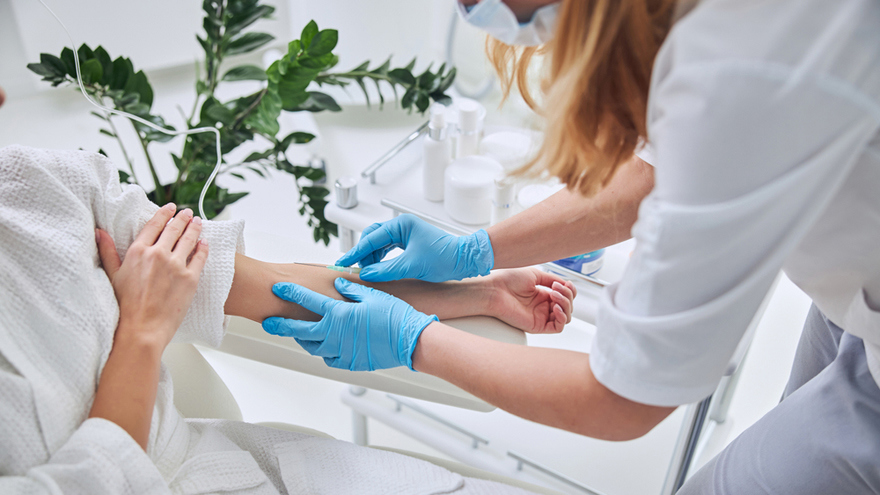
The visit follows six steps: the clinician reviews the patient's health and confirms the treatment plan; the ingredients, dosage and infusion method are checked; the skin is cleaned and an IV catheter is inserted into a suitable vein; the prescribed solution is administered at an appropriate rate; the patient is monitored for discomfort or adverse reactions; and the line is removed, the site dressed, and aftercare instructions given.
Anaesthesia is not required. Patients may feel a brief pinch or stinging sensation when the catheter is inserted, and mild discomfort or bruising may occur at the site.
Stage | What happens |
|---|---|
Appointment length | Approximately 30 to 90 minutes, longer for some formulations |
Immediately after | Most patients resume ordinary activities, depending on how they feel |
Shortly after | Temporary fatigue, dizziness or local discomfort may occur |
Hours | Fluid-related improvement may occur relatively quickly where dehydration is the cause |
Ongoing | Correcting a nutrient deficiency may require continued treatment and follow-up |
The timing and duration of any effect depend on the indication, ingredients, dosage and the patient's health, and recovery from an underlying condition depends on its cause and severity.
Before treatment, inform the clinician about existing medical conditions, allergies, medications, supplements, pregnancy or breastfeeding, and any previous infusion reactions, and follow instructions regarding food, fluids and medication.
Afterwards, keep the insertion site clean and follow the clinic's instructions for removing any dressing. Drink fluids according to your medical needs and any prescribed fluid restrictions. Monitor for increasing pain, redness, swelling or discharge at the site, and seek urgent medical attention for difficulty breathing, facial or throat swelling, chest pain, or other severe symptoms.
Combining General IV Drips with Other Treatments
Combining multiple infusions, injections or supplements should involve a review of total doses, interactions, allergies and the patient's medical condition. That review is the point: the risk of combination is cumulative dose, not the number of appointments.
The documented alternatives are oral hydration, oral vitamin or mineral supplements, dietary adjustments, treatment of an underlying medical condition, or other clinician-recommended therapies — and the clinic's own position is that oral treatment is generally preferable when appropriate and effective.
Knowing the units helps when comparing an infusion against a supplement, because the numbers on labels are not in one scale. The NHS explains that three units are used for vitamins and minerals: milligrams, written as mg, a thousandth of a gram; micrograms, written as μg or mcg, a millionth of a gram, with 1,000 micrograms equal to 1 milligram; and International Units, written as IU, sometimes used for vitamins A, D and E, where the conversion depends on the vitamin.
Safety, Precision, and Clinic Standards
Possible side effects include pain, bruising, swelling, bleeding or irritation at the insertion site, as well as nausea, dizziness or flushing depending on the ingredients. Other risks include infection, vein inflammation, fluid overload, electrolyte disturbances, allergic reactions, and complications related to excessive doses or rapid infusion. Severe reactions are possible but uncommon.
Two of those deserve emphasis because they are specific to this route rather than to the ingredients. Fluid overload is a risk that rises with heart or kidney disease and with fluid restriction, which is why those conditions change the assessment rather than merely being noted in it. And excessive doses matter more by infusion than by mouth, because the digestive system's own limits on absorption are bypassed entirely.
The same reasoning explains why the oral route is preferred where it works. Oral supplementation is appropriate when the digestive system can adequately absorb nutrients, and the most suitable option depends on the identified deficiency or clinical indication rather than on how the treatment is delivered.
The NHS states that all cosmetic procedures carry some risk, whether surgical or non-surgical, and that they can lead to serious complications if not done correctly. Its advice is to choose a reputable, safe and qualified practitioner trained and experienced in the procedure you are having, and to ask about the procedure, the products used, and what could go wrong.
At SeoJeong Dermatology, treatment planning is carried out by a Korean board-certified dermatologist, each patient receives an individual skin assessment to select treatments suited to their needs, and consultation precedes the selection of any procedure. The clinic is a Registered Medical Institution for Attracting Foreign Patients, certified by the Ministry of Health and Welfare in compliance with the Medical Overseas Expansion and Foreign Patients Attraction Act; its business registration number is 342-17-01916.
NHS guidance on having cosmetic treatment abroad advises finding out what happens if there are complications, where follow-up appointments will be, and how easily you could travel back to the destination where you were treated. It notes that overseas clinics may not provide follow-up treatment to the same standard, and advises asking whether the practitioner speaks a language you understand, since they need to be able to explain the procedure and understand your concerns.
The Bottom Line
An infusion is a delivery route; what it does depends on the formulation and the indication.
Most people get the nutrients they need from a varied and balanced diet.
Oral treatment is generally preferable when it is appropriate and effective.
Heart or kidney disease, fluid restriction and electrolyte imbalance change the assessment.
An appointment runs about 30 to 90 minutes including monitoring.
Frequently Asked Questions
Do I actually need an IV drip?
Only if there is a clear clinical indication. Most people get all the nutrients they need from a varied and balanced diet, and oral treatment is generally preferable where it works.
How long does it take?
Approximately 30 to 90 minutes for the appointment, with some formulations taking longer. The total visit also includes consultation, preparation and monitoring.
Does it hurt?
No anaesthesia is needed. A brief pinch or stinging sensation is usual when the catheter is inserted, and mild discomfort or bruising may follow.
Will it give me more energy?
Evidence for general energy, immunity or anti-ageing benefits varies by formulation. Where fatigue is persistent, investigating the cause is more useful than infusing.
Who should not have one?
People with certain heart or kidney conditions, fluid restrictions, relevant allergies or electrolyte imbalances, and anyone with an active infection at the proposed insertion site.
What should I watch for afterwards?
Increasing pain, redness, swelling or discharge at the site. Seek urgent attention for difficulty breathing, facial or throat swelling, or chest pain.
Can I have several infusions together?
Only after a review of total doses, interactions, allergies and your medical condition, since the risk of combination is cumulative dose.
Can I have the consultation in English?
Yes. International patients receive consultations in English at SeoJeong Dermatology, supported by a dedicated global coordinator who handles English-language communication and consultation arrangements.
Book a Consultation at SeoJeong Dermatology

The question worth asking first is whether an infusion is indicated at all, and that is a medical assessment rather than a booking preference. SeoJeong Dermatology is at B-123, Lobby Floor, Acro Vista Arcade, 188 Seochojungang-ro, Seocho-gu, Seoul, South Korea. Opening hours are Monday and Thursday 09:30–19:30, Tuesday and Friday 09:30–18:30, and Saturday 09:30–15:00, with a lunch break from 12:30 to 13:30 Monday to Friday; the clinic is closed on Wednesday and Sunday. To arrange a consultation, use the contact page, call +82-2-533-9300, or email info@seojeongclinic.com.
Incheon International Airport is roughly 11 to 13 hours' non-stop flight from the US West Coast and 14 to 16 hours from the East Coast, with departure hubs including Los Angeles, San Francisco, Seattle, New York, Chicago, and Atlanta; Seocho-gu is reached from Incheon by airport limousine, taxi, or public transport. Arriving at least one day before the appointment allows time for travel recovery and the consultation. Korea Standard Time is UTC+9. US citizens are currently exempt from K-ETA only until 31 December 2026, which may change from 1 January 2027, and a digital e-Arrival Card has been mandatory for every entry since 1 January 2026.
Disclaimer
This page is for general information only and is not a substitute for individual medical advice, diagnosis, or treatment. Outcomes vary between individuals, and no specific result is guaranteed. Please consult a qualified medical professional about your own circumstances.
Sources & Further Reading
NHS — Vitamins and minerals — what vitamins and minerals do, whether most people need supplements, and the units used to measure them
NHS — Before you have a cosmetic procedure — risks of surgical and non-surgical procedures, and choosing a practitioner
NHS — Cosmetic surgery abroad — complications, follow-up and language when treated outside your home country
Other Services
Explore additional treatments offered by our specialists.

Wart & Corn Cryotherapy
Wart and corn cryotherapy in Seoul is a treatment at SeoJeong Dermatology in Seocho-gu that uses an extremely cold substance, usually liquid nitrogen, to destroy wart tissue.
Learn More

Thermage Skin Tightening
Thermage skin tightening in Seoul is a non-surgical treatment that uses radiofrequency energy to heat deeper skin tissue and support collagen remodeling.
Learn More
Re2O Skin Booster
Re2O skin booster in Seoul is a skin booster based on human-derived acellular dermal matrix, used in aesthetic treatments intended to improve skin texture and firmness.
Learn More