Personalized Medical Care & Dedicated International Patient Concierge


Skin Lifting & Tightening · Needs Clinic Confirmation
Trinity Laser Lifting
Trinity laser lifting in Seoul is a laser-based treatment intended to improve skin appearance and firmness, offered at SeoJeong Dermatology in Seocho-gu.
Schedule a ConsultationTrinity Laser Lifting
Medically reviewed by Dr. Lee Jiyoung, Board-Certified Dermatologist
Trinity laser lifting in Seoul is a laser-based treatment intended to improve skin appearance and firmness, offered at SeoJeong Dermatology in Seocho-gu. The specific mechanism, treatment effects and expected results depend on the laser system, the handpiece and the treatment protocol rather than on the name of the device.
What Is Trinity Laser Lifting?
Trinity laser lifting is a laser-based treatment intended to improve skin appearance and firmness. What the treatment does in any given session is determined by the handpiece and the settings selected for the indication, which is why the consultation confirms the device's intended use before anything is scheduled.
The manufacturer describes Trinity as a three-wavelength diode laser system.
The three wavelengths are 755 nm, 808 nm and 1064 nm.
The system uses contact cooling.
A session takes approximately 10 to 15 minutes.
The manufacturer promotes the lifting mode for skin tightening, lifting and improved skin tone — and these are manufacturer-described benefits, not clinic outcome claims.
That distinction is the one to keep in mind. What follows is the mechanism, the device specification, the session length, the risks and the recovery.
Why three wavelengths rather than one is a reasonable question, and the general principle is well documented. DermNet explains that laser light is monochromatic, meaning the radiation is of a single wavelength, and that the light is produced within an optical cavity containing a medium — a gas, a liquid or a solid — with each medium producing a specific wavelength that may fall in the visible spectrum or the infrared. It adds that the wavelength peaks, the pulse durations, and how the target skin tissue absorbs the light together determine the clinical applications of a laser type. A system carrying three wavelengths is therefore carrying three different absorption profiles, and selecting between them is a clinical decision rather than a setting.
Cooling is not a comfort feature alone. DermNet describes non-ablative laser work as heating the dermal collagen while avoiding damage to the surface skin cells by cooling the epidermis, and notes that multiple treatments are required to smooth the skin. Contact cooling is part of how a device heats what is below without injuring what is above.
Who Performs Trinity Laser Lifting at SeoJeong Dermatology
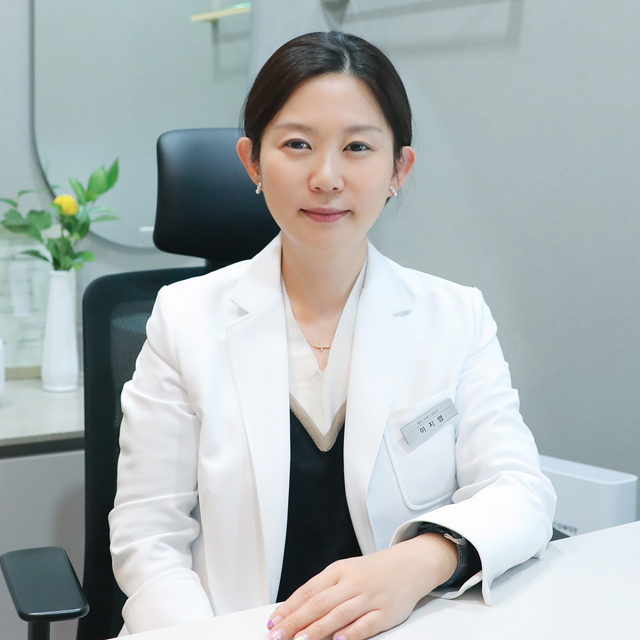
Dr. Lee Jiyoung
Board-certified Dermatologist
Assessment and treatment are carried out by Dr. Lee Jiyoung, Chief Director of SeoJeong Dermatology and a board-certified dermatologist in South Korea with more than 20 years of clinical experience. Her medical education and her dermatology specialist training were both completed in South Korea, and she holds an ECFMG certificate.
The consultation reviews medical history, medications, skin type, the treatment area, previous procedures and the patient's goals. The skin is then examined, and the device's intended use, the patient's suitability, the risks and the alternatives are confirmed before proceeding. Skin type carries particular weight in laser work, because the same settings do not behave the same way on every skin.
Before establishing the clinic in April 2022, she was Director at Cheongdam Lee Ji-ham Dermatology Clinic, at B&C Dermatology Clinic's Gangnam branch, and at CU Cleanup Dermatology Clinic's Yeongdeungpo branch. She is a regular member of the Korean Dermatological Association, the Korean Association of Dermatologists, the Korean Academy of Anti-Aging Dermatology, the Korean Acne Society, and the Korean Atopic Dermatitis Association. SeoJeong Dermatology is a single-physician clinic, and a dedicated global coordinator supports international patients with English-language communication.
Treatment is carried out under the direction of Dr. Lee Jiyoung; this page does not claim that one specific doctor personally performs every session of this service.
Who Is a Good Candidate for Trinity Laser Lifting?
This treatment may suit:
Adults with a treatable skin concern that matches the device's intended use.
Patients with realistic expectations about what a non-ablative laser treatment changes.
Patients who are medically suitable following assessment.
Treatment may need to be postponed for:
Active infection in the treatment area.
Open wounds in the treatment area.
Other contraindications depend on the device instructions, the skin condition, medications and medical history. Medications matter here more than patients usually expect: some change how skin responds to light, and that is a conversation to have before the appointment rather than during it.
Previous laser treatments belong in the same category. Skin that has recently been treated with another energy-based device is not in its baseline state, and the honest answer in that situation is often to wait rather than to adjust settings. The clinic's pre-treatment disclosure list asks specifically about medications, previous laser treatments, recent cosmetic procedures and active skin problems for that reason, and about anything the patient has already been advised regarding sun exposure and skincare. Skin tone is assessed for the same reason. DermNet's guidance on laser work notes that caution is needed with laser therapy in skin of colour, because permanent hypopigmentation and depigmentation may occur — a reason to set conservative settings and to discuss the risk explicitly, not a reason to decline treatment.
What to Expect: Procedure, Recovery, and Results Timeline
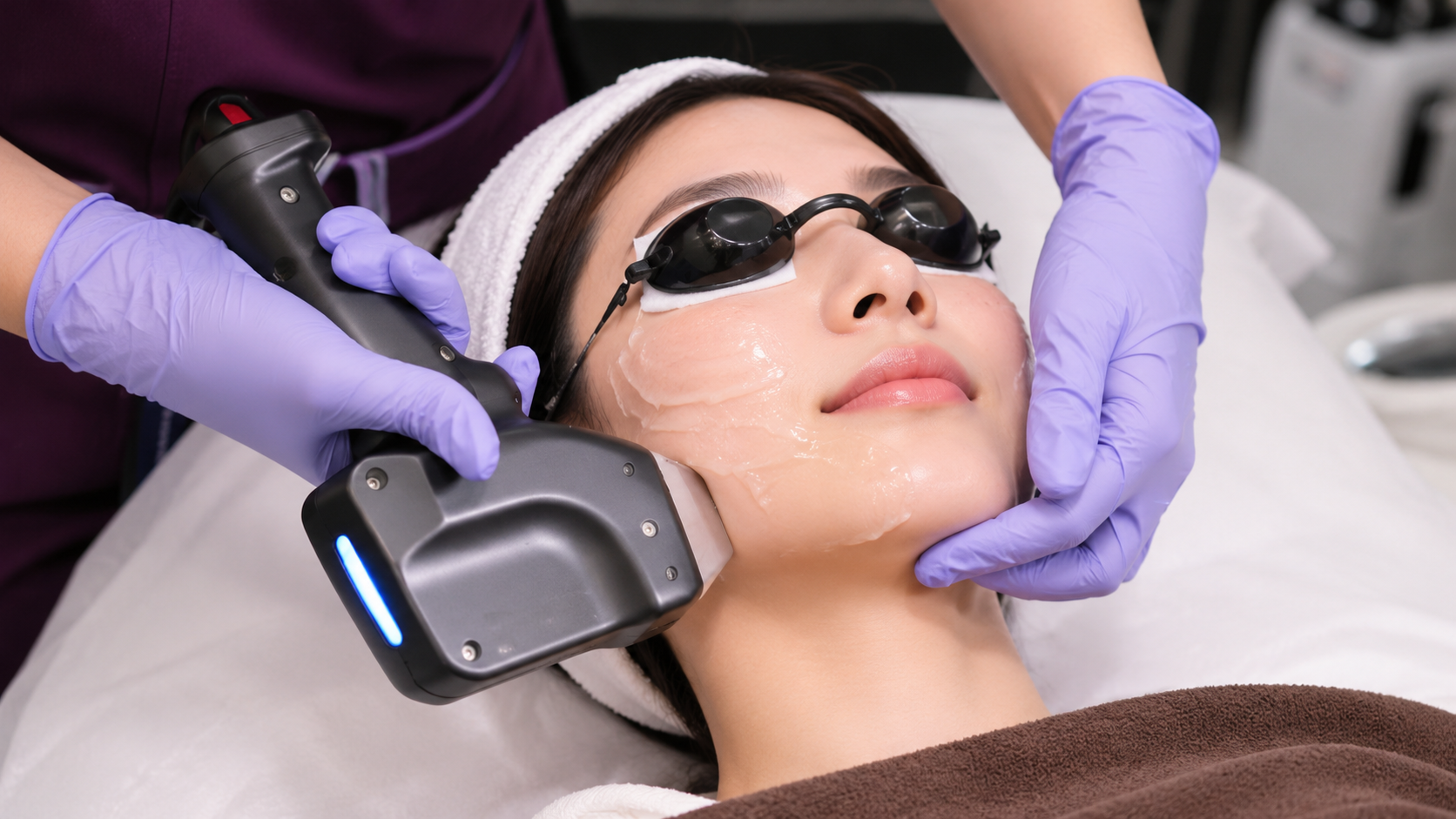
The session follows six steps. The skin is assessed. The treatment area is cleaned. Appropriate eye protection is provided. Device settings are selected according to the indication. Laser energy is delivered using the designated handpiece. The skin response is then checked and aftercare instructions are given.
Eye protection is not a formality. It is standard laser-safety practice, alongside thorough training of personnel, a warning notice outside the procedure room, the use of non-reflective instruments, and the avoidance of flammable materials.
Anaesthesia requirements depend on the treatment settings and the indication, so this is decided for the session rather than stated in advance.
Stage | What happens |
|---|---|
Session length | Approximately 10 to 15 minutes |
Same day | Normal daily activities are generally possible |
Within 1 week | Mild redness usually subsides |
1 to 3 weeks | Initial lifting and skin-tone improvements may appear |
Before treatment, disclose medications, previous laser treatments, recent cosmetic procedures and any active skin problems, and follow the provider's instructions regarding sun exposure and skincare. Afterwards, follow the provider's instructions for gentle skincare and sun protection, avoid irritating products while the skin is sensitive, and contact the provider if severe pain, blistering or worsening skin changes occur.
A ten to fifteen minute session with same-day return to activity is an unusually light footprint for an energy-based treatment — a sign of how much the treatment does in one visit, not only of how convenient it is.
Combining Trinity Laser Lifting with Other Treatments
Additional treatments may be considered for separate concerns such as pigmentation, wrinkles or volume loss, with the provider determining suitability, treatment order and recovery requirements. Pigment concerns are covered under Pigmentation & Redness Treatment, and volume loss under Botox & Dermal Fillers.
Depending on the concern, the documented alternatives are other laser treatments, radiofrequency skin tightening, ultrasound-based tightening, or surgical lifting. Their indications, expected outcomes, risks and recovery requirements are compared individually rather than ranked, and the range the clinic offers is set out on the Skin Lifting & Tightening page.
Safety, Precision, and Clinic Standards
The documented risks are temporary redness, swelling, discomfort, burns, pigment changes and scarring. Their likelihood depends on the device, the energy settings, the skin characteristics and the operator technique.
That list is not unique to this device. DermNet states plainly that laser treatments are burns, and that the adverse effects which may occur include temporary pain, redness, bruising, blistering and crusting; infection, including reactivation of herpes simplex; pigment changes, brown and white marks, which may be permanent; and scarring. A patient choosing a laser treatment is choosing a controlled thermal injury, and the control is what the training and the settings are for.
The NHS states that all cosmetic procedures carry some risk, whether surgical or non-surgical, and that they can lead to serious complications if not done correctly. Its advice is to choose a reputable, safe and qualified practitioner trained and experienced in the procedure you are having, and to ask about the procedure, the products used, and what could go wrong.
At SeoJeong Dermatology, treatment planning is carried out by a Korean board-certified dermatologist, each patient receives an individual skin assessment to select treatments suited to their needs, and consultation precedes the selection of any procedure. The clinic is a Registered Medical Institution for Attracting Foreign Patients, certified by the Ministry of Health and Welfare in compliance with the Medical Overseas Expansion and Foreign Patients Attraction Act; its business registration number is 342-17-01916.
NHS guidance on having cosmetic treatment abroad advises finding out what happens if there are complications, where follow-up appointments will be, and how easily you could travel back to the destination where you were treated. It notes that overseas clinics may not provide follow-up treatment to the same standard, and advises asking whether the practitioner speaks a language you understand, since they need to be able to explain the procedure and understand your concerns.
The Bottom Line
Trinity is described by its manufacturer as a three-wavelength diode laser system at 755 nm, 808 nm and 1064 nm, with contact cooling.
The benefits promoted for the lifting mode are described by the manufacturer.
A session takes about 10 to 15 minutes, with normal activities generally possible the same day.
Mild redness usually settles within a week; initial changes may appear over one to three weeks.
Burns, pigment changes and scarring are possible with any laser treatment, and depend on settings, skin and technique.
Frequently Asked Questions
How long does a session take?
Approximately 10 to 15 minutes. Normal daily activities are generally possible the same day.
Will I need anaesthesia?
Anaesthesia requirements depend on the treatment settings and the indication, so this is decided for the individual session rather than fixed for the treatment.
What are the risks?
Temporary redness, swelling, discomfort, burns, pigment changes and scarring. The likelihood depends on the device, the energy settings, the skin characteristics and the operator technique.
How soon will I see a change?
Initial lifting and skin-tone improvements may appear within one to three weeks. Mild redness usually subsides within one week.
Who should postpone treatment?
Anyone with an active infection or an open wound in the treatment area. Other contraindications depend on the device instructions, the skin condition, medications and medical history.
Is it painful?
Mild warmth, tingling or a brief prickling sensation may occur during treatment. How much is felt depends on the laser type, the settings and individual sensitivity.
How long should I stay in Korea, and when can I fly home?
Most patients can fly home within one to three days, and many can generally fly the same day if they feel well and have no complications. Follow the treating clinician's advice, especially if significant redness, swelling or other side effects occur, and confirm timing with the clinic based on the recovery actually observed.
Can I have the consultation in English?
Yes. International patients receive consultations in English at SeoJeong Dermatology, supported by a dedicated global coordinator who handles English-language communication and consultation arrangements.
Book a Consultation at SeoJeong Dermatology
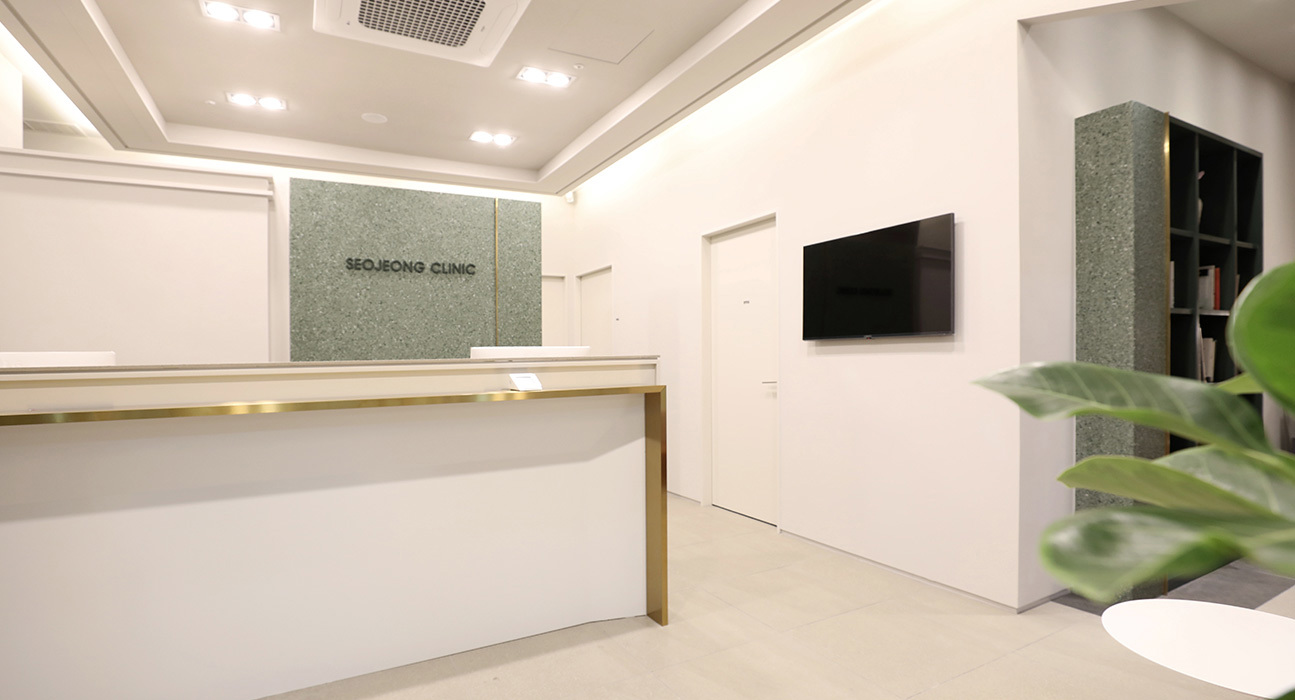
The decision worth making carefully is which concern is being treated and whether this device's intended use matches it, which is an examination rather than a selection from a menu. SeoJeong Dermatology is at B-123, Lobby Floor, Acro Vista Arcade, 188 Seochojungang-ro, Seocho-gu, Seoul, South Korea. Opening hours are Monday and Thursday 09:30–19:30, Tuesday and Friday 09:30–18:30, and Saturday 09:30–15:00, with a lunch break from 12:30 to 13:30 Monday to Friday; the clinic is closed on Wednesday and Sunday. To arrange a consultation, call +82-2-533-9300 or email info@seojeongclinic.com.
Incheon International Airport is roughly 11 to 13 hours' non-stop flight from the US West Coast and 14 to 16 hours from the East Coast, with departure hubs including Los Angeles, San Francisco, Seattle, New York, Chicago, and Atlanta; Seocho-gu is reached from Incheon by airport limousine, taxi, or public transport. Arriving at least one day before the appointment allows time for travel recovery and the consultation. Korea Standard Time is UTC+9. US citizens are currently exempt from K-ETA only until 31 December 2026, which may change from 1 January 2027, and a digital e-Arrival Card has been mandatory for every entry since 1 January 2026.
Disclaimer
This page is for general information only and is not a substitute for individual medical advice, diagnosis, or treatment. Outcomes vary between individuals, and no specific result is guaranteed. Please consult a qualified medical professional about your own circumstances.
Sources & Further Reading
DermNet — Lasers in dermatology — laser light properties and wavelength selection, non-ablative heating with epidermal cooling, laser-safety precautions, and the adverse effects of laser treatment
NHS — Before you have a cosmetic procedure — risks of surgical and non-surgical procedures, and choosing a practitioner
NHS — Cosmetic surgery abroad — complications, follow-up and language when treated outside your home country
Other Services
Explore additional treatments offered by our specialists.

Wart & Corn Cryotherapy
Wart and corn cryotherapy in Seoul is a treatment at SeoJeong Dermatology in Seocho-gu that uses an extremely cold substance, usually liquid nitrogen, to destroy wart tissue.
Learn More

Thermage Skin Tightening
Thermage skin tightening in Seoul is a non-surgical treatment that uses radiofrequency energy to heat deeper skin tissue and support collagen remodeling.
Learn More
Re2O Skin Booster
Re2O skin booster in Seoul is a skin booster based on human-derived acellular dermal matrix, used in aesthetic treatments intended to improve skin texture and firmness.
Learn More