Personalized Medical Care & Dedicated International Patient Concierge


Skin Boosters & Rejuvenation · Needs Clinic Confirmation
Trifill Dermal Regeneration
Trifill dermal regeneration in Seoul is a device-assisted treatment that combines carbon dioxide gas delivery with an injectable solution.
Schedule a ConsultationTrifill Dermal Regeneration
Medically reviewed by Dr. Lee Jiyoung, Board-Certified Dermatologist
Trifill dermal regeneration in Seoul is a device-assisted treatment that combines carbon dioxide gas delivery with an injectable solution. At SeoJeong Dermatology in Seocho-gu it may be used to target selected depressed scars and skin-texture concerns, and the exact treatment effect depends on the injected substance and the clinical technique.
What Is Trifill Dermal Regeneration?
The treatment combines two actions in one procedure: CO₂ gas is delivered into the targeted tissue, and an injectable solution follows according to the treatment protocol.
The device, Trifill Pro, uses a CO₂-assisted subcision and solution-injection system.
It may be used for selected depressed scars and skin-texture concerns.
Each session may take around 30 to 60 minutes.
One to three sessions may be needed, depending on skin condition and treatment goals.
Potential benefits include improvement in selected depressed scars and uneven texture, and complete scar removal is not guaranteed.
What the device does can be described; the result it produces cannot be guaranteed, and no regulatory approval is claimed for it.
Subcision is the established procedure this device is built around, and understanding it explains what the treatment is attempting. DermNet describes subcision as a minor surgical procedure used for treating depressed cutaneous scars and wrinkles, in which the sharp edge of a needle is used to break fibrotic strands tethering the scar to the underlying tissue; the release of those strands, together with new collagen deposition caused by wound healing, leads to cosmetic improvement of the scar. It lists the indications as depressed distensile scars from acne, trauma or surgery; depressed bound-down scars from acne, chickenpox, trauma or surgery — excluding deep ice-pick scars; depressed skin grafts; wrinkles; and cellulite dimples.
That exclusion matters when a patient is choosing between treatments. A deep ice-pick scar is a narrow, vertical defect rather than a tethered depression, and releasing tissue beneath it does not address its shape.
Who Performs Trifill Dermal Regeneration at SeoJeong Dermatology
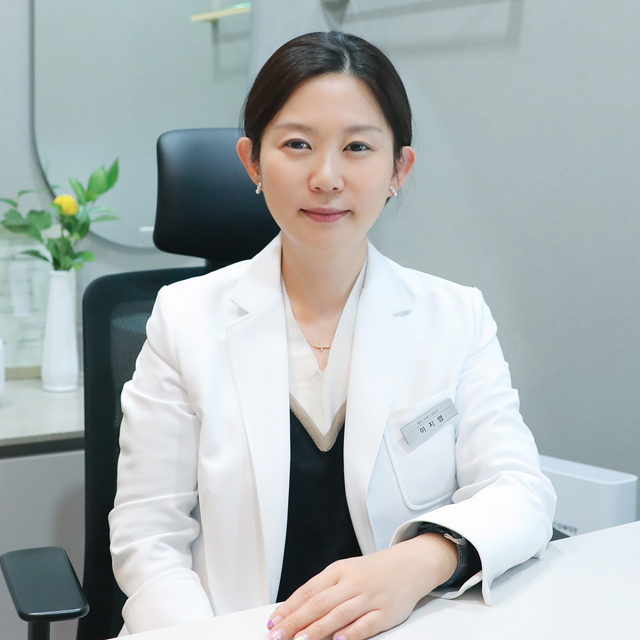
Dr. Lee Jiyoung
Board-certified Dermatologist
Assessment and treatment are carried out by Dr. Lee Jiyoung, Chief Director of SeoJeong Dermatology and a board-certified dermatologist in South Korea with more than 20 years of clinical experience. Her medical education and her dermatology specialist training were both completed in South Korea, and she holds an ECFMG certificate.
The consultation reviews medical history, medications, allergies and previous skin treatments. The skin is then examined to assess scar depth and type, after which suitability, expected outcomes, potential risks and alternative treatments are discussed. Assessing scar type rather than simply noting that scarring is present is the step that determines whether this treatment is the right one at all.
One objective tool exists for that assessment. DermNet describes Goodman and Baron's qualitative acne scar grading system, which separates macular scars — flat erythematous, hyperpigmented or hypopigmented marks that represent a problem of colour rather than contour — from mild, moderate and severe atrophic or hypertrophic scarring, graded by whether they are obvious at social distances of 50 cm or greater and whether an atrophic scar can still be flattened by manual stretching of the skin.
Before establishing the clinic in April 2022, she was Director at Cheongdam Lee Ji-ham Dermatology Clinic, at B&C Dermatology Clinic's Gangnam branch, and at CU Cleanup Dermatology Clinic's Yeongdeungpo branch. She is a regular member of the Korean Dermatological Association, the Korean Association of Dermatologists, the Korean Academy of Anti-Aging Dermatology, the Korean Acne Society, and the Korean Atopic Dermatitis Association. SeoJeong Dermatology is a single-physician clinic, and a dedicated global coordinator supports international patients with English-language communication.
Treatment is carried out under the direction of Dr. Lee Jiyoung; this page does not claim that one specific doctor personally performs every session of this service.
Who Is a Good Candidate for Trifill Dermal Regeneration?
This treatment may suit, after medical assessment:
Patients with selected depressed acne scars.
Patients with tethered scars.
Patients with uneven skin texture.
Treatment may need to be avoided or postponed for:
Patients with active skin infections.
Patients with relevant product allergies.
Patients with medical conditions increasing procedural risks.
DermNet's contraindications for subcision are worth knowing in advance because two of them are easy to overlook: a history of hypertrophic or keloid scars, and current or recent systemic oral retinoid use within the past twelve months, alongside bleeding or clotting disorders and active bacterial or viral infection. A patient who finished a course of oral isotretinoin six months ago should mention it without being asked.
What to Expect: Procedure, Recovery, and Results Timeline
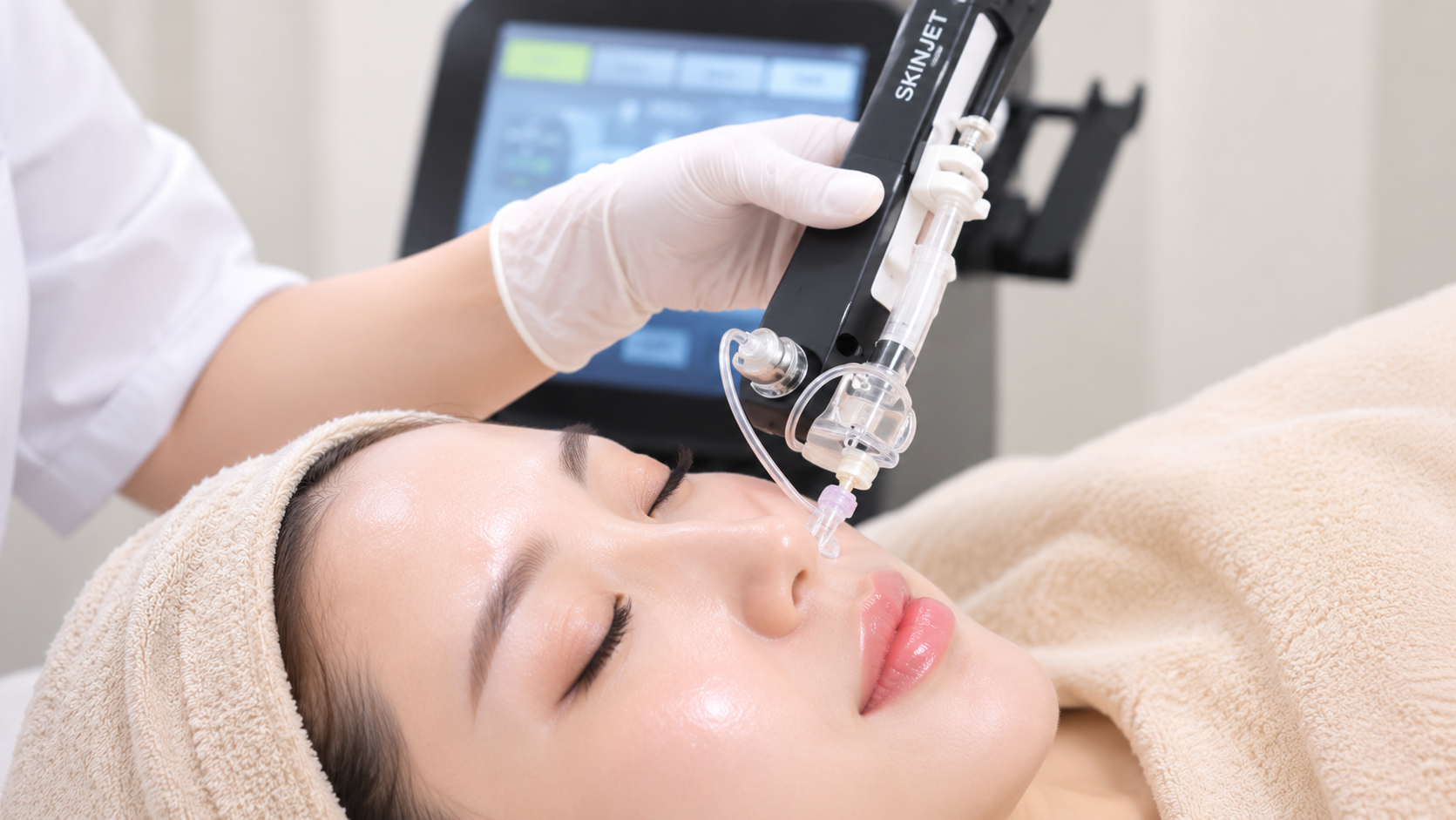
The treatment area is cleansed and anaesthesia may be applied if appropriate. The device then delivers CO₂ gas into the targeted tissue, followed by an injectable solution according to the treatment protocol. The clinician checks the treated area and provides aftercare instructions.
Topical numbing cream may be used. Patients may experience temporary pressure, warmth or discomfort.
Stage | What happens |
|---|---|
Session length | Around 30 to 60 minutes |
Sessions | 1 to 3, depending on skin condition and treatment goals |
1 to 2 weeks | Mild redness and swelling may improve |
Longer | Bruising may take longer to resolve |
2 to 4 weeks | Initial improvements may appear |
4 to 8 weeks | Further changes may develop |
Before treatment, disclose medications, allergies and medical conditions, follow the clinician's instructions, and do not stop prescribed medication without medical advice.
Afterwards, keep the area clean, avoid unnecessary pressure or rubbing, protect the skin from sun exposure, and follow the clinic's specific instructions. Sun protection is not a general wellness suggestion here; post-inflammatory pigment change is a documented consequence of procedures in this category, and it is more likely in skin that has been exposed while healing.
On how much treatment is typically needed, DermNet reports that for conventional subcision, three to six visits suffice for the majority of cases of moderate scarring, with intervals of at least one month between treatments generally recommended, and that individuals vary in their ability to form collagen. The number of sessions required depends on the type, location and severity of the depression and on the intensity of treatment.
Combining Trifill Dermal Regeneration with Other Treatments
Combination treatments may be considered based on skin condition and clinical assessment. Scar work more broadly is described under Acne Scar & Scar Treatment, and resurfacing options under Pore & Skin Texture Treatment.
The documented alternatives are manual subcision, fractional laser treatment, and microneedling, depending on scar type and depth. Which is appropriate is a question about the scar rather than about the technology: a tethered rolling scar, a boxcar scar and a textural irregularity are three different problems.
DermNet notes that subcision as an acne scar treatment can be effectively combined with topical retinoids, with microneedling performed more than one day after subcision, with acid peels such as 15% trichloroacetic acid applied every four weeks, with TCA CROSS, and with fractional laser treatment. Combination in this area is normal; doing two things to the same skin on the same day usually is not.
Safety, Precision, and Clinic Standards
The documented effects are redness, swelling, bruising, pain, infection, pigmentation changes, and inflammatory reactions.
DermNet's complication list for subcision gives a fuller picture of what this category involves: haematoma due to bleeding, with a small haematoma being normal; pain and tenderness at treated sites; hypertrophic or keloid scars in five to ten per cent of cases, most likely in periorbital skin, the glabella, the labial commissure and the upper lip; infection, usually presenting as a localised acneiform papule or pustule; temporary post-inflammatory hyperpigmentation, for which sun protection or avoidance is advised; a sub-optimal response or lack of improvement; and injury to a nerve or blood vessel, most likely at mandibular, temporal and pre-auricular sites.
It also notes that the number and intensity of treatment should be limited at the first session in order to review the patient's response, particularly in areas with a predilection for a hypertrophic reaction. A conservative first session is a deliberate clinical choice rather than caution for its own sake.
The NHS states that all cosmetic procedures carry some risk, whether surgical or non-surgical, and that they can lead to serious complications if not done correctly. Its advice is to choose a reputable, safe and qualified practitioner trained and experienced in the procedure you are having, and to ask about the procedure, the products used, and what could go wrong.
At SeoJeong Dermatology, treatment planning is carried out by a Korean board-certified dermatologist, each patient receives an individual skin assessment to select treatments suited to their needs, and consultation precedes the selection of any procedure. The clinic is a Registered Medical Institution for Attracting Foreign Patients, certified by the Ministry of Health and Welfare in compliance with the Medical Overseas Expansion and Foreign Patients Attraction Act; its business registration number is 342-17-01916.
NHS guidance on having cosmetic treatment abroad advises finding out what happens if there are complications, where follow-up appointments will be, and how easily you could travel back to the destination where you were treated. It notes that overseas clinics may not provide follow-up treatment to the same standard, and advises asking whether the practitioner speaks a language you understand, since they need to be able to explain the procedure and understand your concerns.
The Bottom Line
The device combines CO₂-assisted subcision with delivery of an injectable solution.
It targets selected depressed and tethered scars and uneven texture; deep ice-pick scars are not what this addresses.
Complete scar removal is not guaranteed, and one to three sessions may be needed.
A history of keloid or hypertrophic scarring, and recent oral retinoid use, must be disclosed.
Redness and swelling improve over one to two weeks; changes develop from two to eight weeks.
Frequently Asked Questions
What kinds of scars does this treat?
Selected depressed acne scars, tethered scars and uneven skin texture, assessed by scar depth and type. Deep ice-pick scars are not treated by releasing tissue beneath them.
Will my scars be removed completely?
No. Potential benefits include improvement in selected depressed scars and uneven texture, and complete scar removal is not guaranteed.
How many sessions will I need?
One to three sessions, depending on skin condition and treatment goals, with each session taking around 30 to 60 minutes.
What does recovery look like?
Mild redness and swelling may improve within one to two weeks, while bruising may take longer to resolve.
When would I see a change?
Initial improvements may appear within two to four weeks, with further changes over four to eight weeks. Results vary by patient.
Why does my history of keloid scarring matter?
Because procedures that release tissue in this way carry a documented risk of hypertrophic or keloid reaction, and a prior history raises it. It is one of the reasons treatment may be limited at the first session.
How should I plan a trip around this treatment?
Because one to three sessions may be needed and bruising can outlast the first week or two, the realistic question is how much of a course fits the visit rather than whether a single session does. Settle that at the consultation, along with what a partial course would and would not achieve, and plan the return flight around the recovery actually observed rather than the one hoped for.
Can I have the consultation in English?
Yes. International patients receive consultations in English at SeoJeong Dermatology, supported by a dedicated global coordinator who handles English-language communication and consultation arrangements.
Book a Consultation at SeoJeong Dermatology
Scar treatment starts with grading the scar, because the type and depth decide which of several quite different procedures is appropriate. SeoJeong Dermatology is at B-123, Lobby Floor, Acro Vista Arcade, 188 Seochojungang-ro, Seocho-gu, Seoul, South Korea. Opening hours are Monday and Thursday 09:30–19:30, Tuesday and Friday 09:30–18:30, and Saturday 09:30–15:00, with a lunch break from 12:30 to 13:30 Monday to Friday; the clinic is closed on Wednesday and Sunday. To arrange a consultation, call +82-2-533-9300 or email info@seojeongclinic.com.
Incheon International Airport is roughly 11 to 13 hours' non-stop flight from the US West Coast and 14 to 16 hours from the East Coast, with departure hubs including Los Angeles, San Francisco, Seattle, New York, Chicago, and Atlanta; Seocho-gu is reached from Incheon by airport limousine, taxi, or public transport. Arriving at least one day before the appointment allows time for travel recovery and the consultation. Korea Standard Time is UTC+9. US citizens are currently exempt from K-ETA only until 31 December 2026, which may change from 1 January 2027, and a digital e-Arrival Card has been mandatory for every entry since 1 January 2026.
Disclaimer
This page is for general information only and is not a substitute for individual medical advice, diagnosis, or treatment. Outcomes vary between individuals, and no specific result is guaranteed. Please consult a qualified medical professional about your own circumstances.
Sources & Further Reading
DermNet — Subcision — the mechanism of releasing fibrotic strands, indications and the ice-pick exclusion, contraindications including recent oral retinoids, the Goodman and Baron scar grading system, documented complications, and how many treatments are typically needed
NHS — Before you have a cosmetic procedure — risks of surgical and non-surgical procedures, and choosing a practitioner
NHS — Cosmetic surgery abroad — complications, follow-up and language when treated outside your home country
Other Services
Explore additional treatments offered by our specialists.

Wart & Corn Cryotherapy
Wart and corn cryotherapy in Seoul is a treatment at SeoJeong Dermatology in Seocho-gu that uses an extremely cold substance, usually liquid nitrogen, to destroy wart tissue.
Learn More

Thermage Skin Tightening
Thermage skin tightening in Seoul is a non-surgical treatment that uses radiofrequency energy to heat deeper skin tissue and support collagen remodeling.
Learn More
Re2O Skin Booster
Re2O skin booster in Seoul is a skin booster based on human-derived acellular dermal matrix, used in aesthetic treatments intended to improve skin texture and firmness.
Learn More