Personalized Medical Care & Dedicated International Patient Concierge


Medical Dermatology · Needs Clinic Confirmation
Skin Biopsy & Allergy Testing
Skin biopsy and allergy testing in Seoul are diagnostic services at SeoJeong Dermatology in Seocho-gu.
Schedule a ConsultationSkin Biopsy & Allergy Testing
Medically reviewed by Dr. Lee Jiyoung, Board-Certified Dermatologist
Skin biopsy and allergy testing in Seoul are diagnostic services at SeoJeong Dermatology in Seocho-gu. A skin biopsy removes a small sample of skin for laboratory examination to help diagnose skin diseases, infections and inflammatory conditions. Allergy testing — by skin prick, intradermal or patch test — helps identify suspected allergens. They answer different questions, and which one is appropriate depends on the symptoms.
What Is Skin Biopsy & Allergy Testing?
These are investigations rather than treatments, and their value is in what they rule in or out.
A biopsy provides a tissue diagnosis where visual examination is not enough.
Allergy testing identifies relevant triggers and guides avoidance or treatment plans.
The appropriate allergy test depends on the symptoms and the suspected allergy.
Neither test guarantees a diagnosis; additional testing may sometimes be necessary.
Patch testing is more appropriate for suspected delayed contact allergy than routine prick testing.
DermNet describes a skin biopsy as the removal of a sample of skin, usually undertaken with a local anaesthetic injection to numb the area, with a suture or dressing applied afterwards; it notes that the additional information obtained can help identify diagnostic clues that are invisible to the naked eye. The punch biopsy is described as generally the most useful type — quick, convenient, producing only a small wound, and creating a full-thickness sample that lets the pathologist see the epidermis, dermis and usually the subcutis, with 3 mm and 4 mm punches the most common sizes.
Allergy testing divides along a line that confuses many patients. DermNet explains that patch testing is undertaken to investigate and confirm substances that produce allergic contact dermatitis, and states plainly that patch tests are not the same as skin prick tests, which are used to diagnose hay fever allergy. It adds that patch testing is largely of value in determining the cause of allergic contact dermatitis and is not useful in investigating irritant dermatitis.
Who Performs Skin Biopsy & Allergy Testing at SeoJeong Dermatology

Dr. Lee Jiyoung
Board-certified Dermatologist
Assessment and treatment are carried out by Dr. Lee Jiyoung, Chief Director of SeoJeong Dermatology and a board-certified dermatologist in South Korea with more than 20 years of clinical experience. Her medical education and her dermatology specialist training were both completed in South Korea, and she holds an ECFMG certificate.
The clinician reviews symptoms, medical history, medication use, allergies and relevant exposures. For a biopsy, the lesion is examined and the sampling method selected; for allergy testing, the suspected trigger is assessed and a prick, intradermal, patch or blood test chosen. Results are interpreted alongside the clinical history rather than read in isolation, and the wider diagnostic work is described on the Medical Dermatology page.
Before establishing the clinic in April 2022, she was Director at Cheongdam Lee Ji-ham Dermatology Clinic, at B&C Dermatology Clinic's Gangnam branch, and at CU Cleanup Dermatology Clinic's Yeongdeungpo branch. She is a regular member of the Korean Dermatological Association, the Korean Association of Dermatologists, the Korean Academy of Anti-Aging Dermatology, the Korean Acne Society, and the Korean Atopic Dermatitis Association. SeoJeong Dermatology is a single-physician clinic, and a dedicated global coordinator supports international patients with English-language communication.
Treatment is carried out under the direction of Dr. Lee Jiyoung; this page does not claim that one specific doctor personally performs every session of this service.
Who Is a Good Candidate for Skin Biopsy & Allergy Testing?
These investigations suit:
People with skin changes that require laboratory diagnosis.
People with symptoms suggesting an allergic reaction.
People with suspected allergic contact dermatitis, for whom patch testing may be appropriate.
People with selected immediate-type allergies, for whom prick or intradermal testing may be considered.
Suitability depends on the test. A biopsy may need modification if there is an infection, a bleeding risk, or impaired wound healing. Allergy skin tests may be unsuitable or less reliable in people with extensive skin disease, on certain medications, or with a history of severe reactions — in which case a clinician may recommend blood testing instead.
Timing affects reliability as much as suitability does. DermNet advises that patch tests are ideally applied when the dermatitis is inactive, and that if the back skin is inflamed the arms or abdominal skin can be used. It also describes an "angry back" reaction, where very active dermatitis at the time of testing produces multiple positive results that are difficult to interpret and usually require re-testing once the eczema is more quiescent.
Patients may seek a biopsy to investigate an unexplained rash, a persistent skin lesion or a suspected infection, and allergy testing to identify triggers associated with contact dermatitis, itching or immediate allergic reactions.
What to Expect: Procedure, Recovery, and Results Timeline
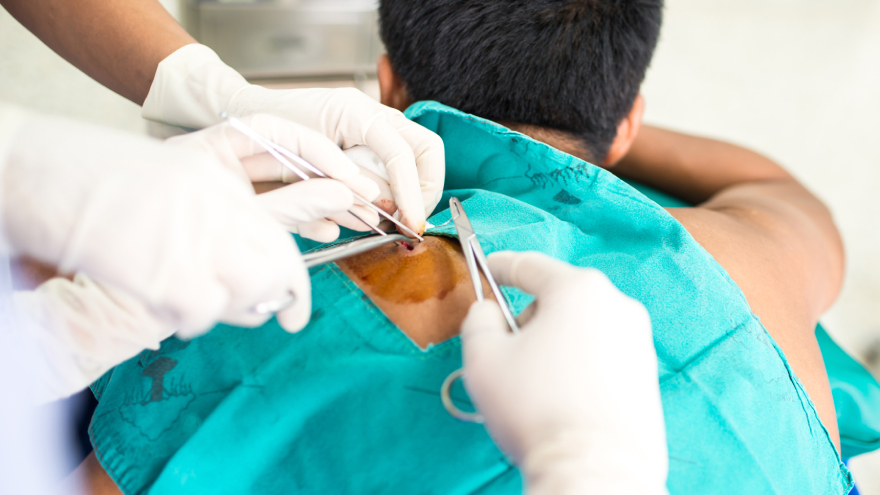
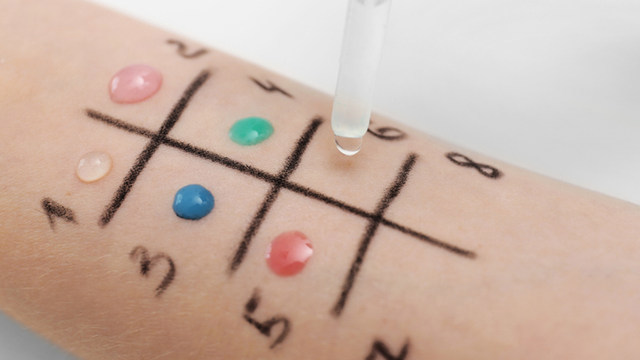
For a biopsy the steps are: cleaning the skin; injecting local anaesthetic; removing a small sample using a suitable technique; applying a dressing and stitches if required; and sending the sample to a laboratory. For allergy testing: reviewing history and medications; applying suspected allergens to the skin or introducing a small amount beneath it, depending on the test; and checking and interpreting the skin response at the appropriate time, with patch testing requiring later readings.
Local anaesthetic is used for a biopsy; allergy tests do not require anaesthesia.
Stage | What happens |
|---|---|
Biopsy procedure | Approximately 10 to 30 minutes for a straightforward procedure |
Biopsy healing | Usually 7 to 10 days; deeper biopsies or lower-leg sites take longer |
Biopsy results | Often approximately 1 to 2 weeks; complex samples take longer |
Prick test | Approximately 20 to 60 minutes for testing and interpretation, read after 15 to 20 minutes |
Patch testing | Usually 3 visits — application, a reading at about 48 hours, and a final reading around days 4 to 7 |
Why patch testing needs three visits rather than one is a matter of biology rather than scheduling. DermNet explains that appropriately diluted allergens are applied, usually to the back, for 48 hours, and that the tests are read at 96 hours because reactions usually take 48 to 96 hours to develop; a positive reaction produces a patch of dermatitis at the application site, which may appear red and possibly raised, vesicular or even blistering.
Preparation for allergy testing is specific. During patch testing it is best to be taking less than 10 mg of oral prednisolone a day, not to be on an immunosuppressive agent that will reduce the reaction, to avoid potent topical steroids at the application site for three days beforehand, to avoid bathing or showering the test area, and to avoid excessive exercise that may dislodge the tapes. Antihistamines can be taken as normal, because they do not interfere with this type of reaction — which is the opposite of the rule for prick testing, where antihistamines may need to be withheld for several days depending on the medication and the clinician's instructions. Do not stop any medication independently.
Before either test, tell the clinician about medications, bleeding disorders, allergies, previous reactions and relevant medical conditions. Bringing health and safety data sheets and product packaging helps, since these may list individual allergen ingredients, and a suspicious product should be brought to the appointment.
Afterwards, for a biopsy, gently clean the wound, apply petroleum jelly as instructed, and keep it covered with a clean dressing, avoiding swimming or soaking until it has healed. For patch testing, keep the patches in place and dry as instructed and attend all scheduled readings.
Combining Skin Biopsy & Allergy Testing with Other Treatments
A biopsy and allergy testing may both be used when a clinician is investigating a persistent rash or a suspected allergic skin condition. They answer different diagnostic questions and are not automatically required together; the choice depends on the history and the examination.
The documented alternatives follow the same logic. For a biopsy, clinical examination, dermoscopy, swab testing or blood tests may help in selected cases, but they cannot replace a biopsy when tissue examination is needed for a definitive diagnosis. For allergy testing, blood-specific IgE testing may be an alternative to prick testing in selected cases.
Where a personal care product is the suspect and formal patch testing is delayed, there is an interim option. DermNet describes repeat open application testing, in which the product is applied twice a day to a 5 cm diameter area of forearm skin for 5 to 10 days; no visible redness or swelling means contact allergy to that product is unlikely. It cautions that some highly irritant products cannot safely be tested this way without appropriate dilution.
Safety, Precision, and Clinic Standards
Biopsy risks are temporary pain, bleeding, infection, scarring and pigment changes. Allergy testing may cause temporary itching, redness, swelling or irritation; severe allergic reactions are rare but possible with certain tests, and trained staff follow appropriate safety procedures.
The published figures put the biopsy risks in proportion. DermNet states that skin biopsy is usually straightforward and complications are uncommon, with the general rule that the larger the sample removed, the higher the chance of complications. Bacterial wound infection affects about 1 to 5 per cent of excisional biopsies and is extremely uncommon in small punch, shave or incisional biopsies. Bleeding can occur in anyone but is particularly troublesome in those with a bleeding tendency or taking blood-thinning medication such as warfarin or aspirin. It is usual for a biopsy site to form a significant permanent scar, and some sites such as the centre of the chest are prone to excessive or hypertrophic scars.
Patch testing has its own small set of adverse effects: severe local reactions with blistering, most notoriously with the hair dye allergen PPD; post-inflammatory pigmentation; a flare-up of the original eczema at sites distant from the reaction; and, rarely, sensitisation during the testing itself, which may produce a positive reaction 10 to 14 days after the tests were applied.
Two points about interpretation are worth carrying into the follow-up appointment. A baseline series of allergens will pick up about 70 per cent of contact dermatitis, so a negative result may mean the dermatitis is endogenous or irritant in cause, or that the relevant allergen was simply not tested. And some allergens temporarily stain the skin — PPD is black, disperse blue is blue — which can be removed with an alcohol swab and should not be confused with a true positive.
Where a sample is taken, DermNet notes that most skin biopsies are placed in formalin and sent for laboratory processing, that reports are issued in about a week, and that interpretation requires considerable training and experience.
The NHS states that all cosmetic procedures carry some risk, whether surgical or non-surgical, and that they can lead to serious complications if not done correctly. Its advice is to choose a reputable, safe and qualified practitioner trained and experienced in the procedure you are having, and to ask about the procedure, the products used, and what could go wrong.
At SeoJeong Dermatology, treatment planning is carried out by a Korean board-certified dermatologist, each patient receives an individual skin assessment to select treatments suited to their needs, and consultation precedes the selection of any procedure. The clinic is a Registered Medical Institution for Attracting Foreign Patients, certified by the Ministry of Health and Welfare in compliance with the Medical Overseas Expansion and Foreign Patients Attraction Act; its business registration number is 342-17-01916.
NHS guidance on having cosmetic treatment abroad advises finding out what happens if there are complications, where follow-up appointments will be, and how easily you could travel back to the destination where you were treated. It notes that overseas clinics may not provide follow-up treatment to the same standard, and advises asking whether the practitioner speaks a language you understand, since they need to be able to explain the procedure and understand your concerns.
The Bottom Line
A biopsy answers a tissue question; allergy testing answers a trigger question.
Patch testing takes three visits across about a week, because reactions take 48 to 96 hours.
Biopsy results usually take about one to two weeks.
A biopsy site normally leaves a permanent scar.
Neither test guarantees a diagnosis, and results are read alongside the history.
Frequently Asked Questions
What is the difference between a patch test and a prick test?
They are not the same. Patch testing investigates delayed allergic contact dermatitis; prick testing is used for immediate-type allergy such as hay fever.
How long do biopsy results take?
Often approximately one to two weeks, though complex samples take longer. Reports from the laboratory are generally issued in about a week.
Why does patch testing need three appointments?
Because reactions usually take 48 to 96 hours to develop. The patches go on, come off at 48 hours, and are read again at around 96 hours, sometimes with a further reading.
Will the biopsy leave a scar?
Yes. It is usual for a biopsy site to form a significant permanent scar, and some sites, such as the centre of the chest, are prone to thicker scarring.
Can I take my antihistamines before testing?
For patch testing, yes — antihistamines do not interfere with that type of reaction. For prick testing they may need to be withheld for several days. Never stop a medication independently.
What should I bring to an allergy appointment?
Product packaging and any health and safety data sheets, since these list ingredients, plus any suspicious product you think may be responsible.
What if the test comes back negative?
A baseline series picks up about 70 per cent of contact dermatitis, so a negative result may mean the cause is endogenous or irritant, or that the relevant allergen was not tested.
Can I have the consultation in English?
Yes. International patients receive consultations in English at SeoJeong Dermatology, supported by a dedicated global coordinator who handles English-language communication and consultation arrangements.
Book a Consultation at SeoJeong Dermatology
Which test to do — if any — follows from the history and the examination, so that conversation is the appointment worth booking first. SeoJeong Dermatology is at B-123, Lobby Floor, Acro Vista Arcade, 188 Seochojungang-ro, Seocho-gu, Seoul, South Korea. Opening hours are Monday and Thursday 09:30–19:30, Tuesday and Friday 09:30–18:30, and Saturday 09:30–15:00, with a lunch break from 12:30 to 13:30 Monday to Friday; the clinic is closed on Wednesday and Sunday. To arrange a consultation, use the contact page, call +82-2-533-9300, or email info@seojeongclinic.com.
Incheon International Airport is roughly 11 to 13 hours' non-stop flight from the US West Coast and 14 to 16 hours from the East Coast, with departure hubs including Los Angeles, San Francisco, Seattle, New York, Chicago, and Atlanta; Seocho-gu is reached from Incheon by airport limousine, taxi, or public transport. Arriving at least one day before the appointment allows time for travel recovery and the consultation. Korea Standard Time is UTC+9. US citizens are currently exempt from K-ETA only until 31 December 2026, which may change from 1 January 2027, and a digital e-Arrival Card has been mandatory for every entry since 1 January 2026.
Disclaimer
This page is for general information only and is not a substitute for individual medical advice, diagnosis, or treatment. Outcomes vary between individuals, and no specific result is guaranteed. Please consult a qualified medical professional about your own circumstances.
Sources & Further Reading
DermNet — Biopsy of skin — what a skin biopsy is, the punch and other biopsy types, how samples are processed, and the complications and their frequency
DermNet — Patch tests — how patch testing differs from prick testing, the 48- and 96-hour schedule, preparation and medication rules, interpretation, and adverse reactions
NHS — Before you have a cosmetic procedure — risks of surgical and non-surgical procedures, and choosing a practitioner
NHS — Cosmetic surgery abroad — complications, follow-up and language when treated outside your home country
Other Services
Explore additional treatments offered by our specialists.

Wart & Corn Cryotherapy
Wart and corn cryotherapy in Seoul is a treatment at SeoJeong Dermatology in Seocho-gu that uses an extremely cold substance, usually liquid nitrogen, to destroy wart tissue.
Learn More

Thermage Skin Tightening
Thermage skin tightening in Seoul is a non-surgical treatment that uses radiofrequency energy to heat deeper skin tissue and support collagen remodeling.
Learn More

Re2O Skin Booster
Re2O skin booster in Seoul is a skin booster based on human-derived acellular dermal matrix, used in aesthetic treatments intended to improve skin texture and firmness.
Learn More