Personalized Medical Care & Dedicated International Patient Concierge

Specialty Overview
Laser Hair & Tattoo Removal
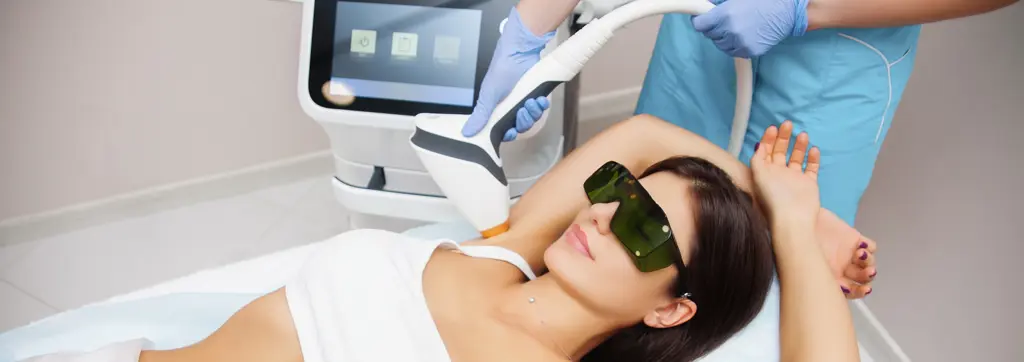
Laser hair removal targets hair follicles to reduce unwanted hair growth, and laser tattoo removal targets tattoo pigment to lighten or remove tattoo ink over multiple sessions.
Schedule a ConsultationLaser Hair & Tattoo Removal
Medically reviewed by Dr. Lee Jiyoung, Board-Certified Dermatologist
Laser hair removal targets hair follicles to reduce unwanted hair growth, and laser tattoo removal targets tattoo pigment to lighten or remove tattoo ink over multiple sessions. At SeoJeong Dermatology in Seocho-gu, Seoul, both are planned after assessment of skin tone, hair characteristics or tattoo pigment by a board-certified dermatologist.
What Is Laser Hair & Tattoo Removal?
Two different jobs share one page because they share one mechanism: a laser emits light at a wavelength that a particular target absorbs, the target converts that light into heat, and the heat damages it while leaving the surrounding tissue alone.
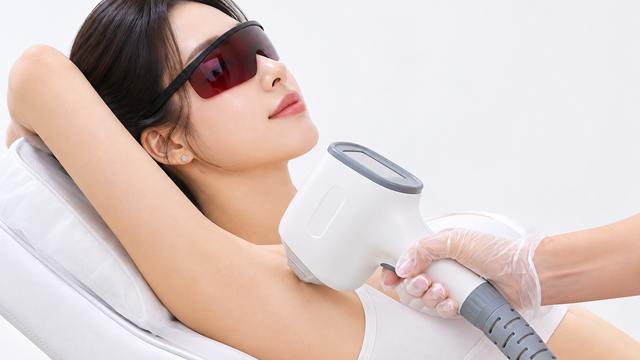
For hair, the light pulses target the hair follicle so the hair falls out and further growth is reduced.
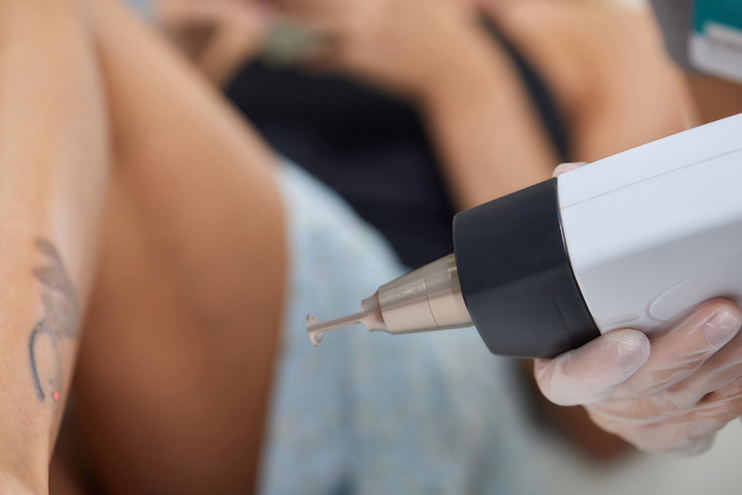
For tattoos, the light breaks pigment into smaller particles that the body gradually clears.
Hair reduction commonly takes 2 to 6 or more sessions, often 4 to 6 weeks apart.
Tattoo fading commonly takes approximately 5 to 10 or more sessions, typically 6 to 8 weeks apart or longer.
The clinic lists the Discovery Pico laser among its equipment, described as used for pigmentation concerns including tattoo removal.
"Removal" promises more than either half of this category delivers. What the clinic claims is narrower: for hair, that treatment reduces unwanted hair growth and that multiple sessions may be required; for tattoos, that laser energy targets tattoo pigment and may gradually reduce its appearance, with the number of sessions and the degree of fading varying by tattoo characteristics and individual skin response. Complete removal of a tattoo cannot be guaranteed, and some tattoos may leave residual pigment or changes in skin texture or colour.
DermNet New Zealand is blunter still about the hair side, classifying methods into three groups — temporary hair removal, temporary hair reduction, and permanent hair removal — and placing laser-assisted and intense pulsed light methods under temporary hair reduction, with electrolysis under permanent removal. That classification, rather than any marketing language, is the right expectation to bring to a consultation.
Who Performs Laser Hair & Tattoo Removal at SeoJeong Dermatology

Dr. Lee Jiyoung
Board-certified Dermatologist
Assessment and treatment are carried out by Dr. Lee Jiyoung, Chief Director of SeoJeong Dermatology and a board-certified dermatologist in South Korea with more than 20 years of clinical experience. Her medical education and her dermatology specialist training were both completed in South Korea, and she holds an ECFMG certificate.
Laser work across pigmentation, redness, acne marks, pores, and tattoo removal is among the clinic's technology strengths, and the assessment this category requires is a dermatological one rather than a technical one. The consultation reviews medical history, medications, tanning history, and scarring history, and assesses skin tone, hair characteristics, or tattoo pigment before any device setting is chosen.
Why that matters is specific. Settings that are correct for one combination of skin tone and hair colour can injure another, and a pigmented mark that is assumed to be a tattoo or a freckle should be identified before any laser is aimed at it — a question that belongs to Medical Dermatology rather than to the laser room.
Before establishing the clinic in April 2022, she was Director at Cheongdam Lee Ji-ham Dermatology Clinic, at B&C Dermatology Clinic's Gangnam branch, and at CU Cleanup Dermatology Clinic's Yeongdeungpo branch. She is a regular member of the Korean Dermatological Association, the Korean Association of Dermatologists, the Korean Academy of Anti-Aging Dermatology, the Korean Acne Society, and the Korean Atopic Dermatitis Association. A dedicated global coordinator supports international patients with English-language communication.
Laser Hair & Tattoo Removal Options Available
Treatment | Target | Session | Course |
|---|---|---|---|
Laser hair removal | Hair follicles | 5–30 minutes for small areas, 30–60 minutes for larger | 2–6 or more sessions, often 4–6 weeks apart |
Laser tattoo removal | Tattoo pigment | Approximately 10–30 minutes for many small or medium tattoos | 5–10 or more sessions, typically 6–8 weeks apart or longer |
Hair removal requires a suitable hair-removal laser. Tattoo removal may use pigment-targeting lasers, including picosecond or Q-switched systems; the appropriate device depends on the indication and on individual assessment.
DermNet, writing on alexandrite laser treatment, explains why the device question is not interchangeable. It describes the alexandrite laser as emitting infrared light at 755 nm and working by photothermolysis — using light to heat a selected area for destruction — and notes that for hair removal it is generally ineffective for light-coloured hair but useful for dark hair in Fitzpatrick types I to III, with extreme caution recommended in tanned or darker-skinned patients because the laser can also destroy melanin and leave white patches of skin. For tattoos, DermNet describes Q-switched alexandrite lasers as used to remove black, blue and green pigment through selective destruction of ink molecules that are then absorbed by macrophages and eliminated, and notes that sufficient energy must be delivered in each pulse to fragment the pigment: without enough energy there is no fragmentation and no tattoo removal.
There are alternatives to both. For hair: shaving, waxing, depilatory creams, and electrolysis, which can permanently remove individual hairs and may suit some hair colours that lasers do not target effectively. For tattoos: laser treatment, surgical removal for selected small tattoos — which removes the affected skin and leaves a scar — or leaving the tattoo unchanged.
Who Is a Good Candidate for Laser Hair & Tattoo Removal?
People seeking hair reduction with suitable hair and skin characteristics.
People seeking tattoo fading or removal, after assessment of the tattoo, ink colours, and skin type.
Adults who understand that fading is gradual and that the degree achievable varies.
Treatment may need postponing, or an alternative, for:
People with active infections or irritated skin in the treatment area.
People with a recent tan, in the case of hair removal.
People with a history of abnormal scarring, pigmentation changes, or impaired wound healing.
People taking medications that affect photosensitivity.
People with hair that responds poorly to laser energy.
The tanning restriction is the one most often underestimated. It is not a scheduling preference: a tanned skin absorbs more of the light intended for the follicle, which is how burns and pigment loss happen.
Why patients from the United States ask about this treatment
Patients from the United States may choose these treatments to reduce unwanted hair, simplify grooming, or lighten unwanted tattoos; tattoo removal is sought for personal, professional, or aesthetic reasons. The clinic's laser systems for pigmentation, redness, acne marks, pores, and tattoo removal are among the reasons they come here.
Two recorded hesitations apply with particular force here. Uncertainty about the number of sessions required is intrinsic rather than avoidable, since both halves of this category are inherently multi-session, and concerns about how long to stay in Korea run into the same fact: the sessions are weeks apart by design, because the skin and the pigment-clearing process both need that interval. A single trip will usually accommodate one session, not a course.
Concerns about treatment safety and side effects are the third, and they are reasonable. The complication list for this category includes burns, blistering, and pigment change, which is why assessment precedes treatment rather than accompanying it.
Consultation and assessment
The clinician reviews medical history, medications, tanning history, and scarring history, then assesses skin tone and hair characteristics, or the tattoo's size, location, ink colours, depth, and age. The discussion covers risks, expected results, and what the treatment requires — which for a tattoo means the likely number of sessions and the realistic degree of fading, stated before the first session rather than discovered during the course.
Disclose medications, previous scarring, skin conditions, recent treatments, any previous tattoo-removal attempts, and any history of pigmentation changes. Follow the clinician's instructions about shaving or otherwise preparing the treatment area.
What to Expect: Procedure, Recovery, and Results Timeline

Assessment. The treatment area, hair characteristics or tattoo, and surrounding skin are examined.
Preparation. The skin is cleaned and, for hair removal, shaved if needed.
Eye protection. Protective eyewear is provided before the laser is used.
Laser treatment. Pulses are applied at settings selected for the skin and the target.
Cooling. Skin cooling or soothing care is applied if needed.
Aftercare. Wound-care, sun-protection and follow-up instructions are given.
Treatment may feel like warm pinpricks or a rubber-band snap. Cooling or clinician-approved topical numbing may be used where appropriate; general anesthesia is not used. DermNet records the same sensation from the clinical side, noting that many patients describe each pulse as feeling like the snapping of a rubber band against the skin, that skin surface cooling is applied during all hair-removal procedures, and that a topical anaesthetic may be applied but is not usually necessary.
Stage | What to expect |
|---|---|
Hair removal recovery | Redness and swelling commonly settle within 1–3 days |
Hair removal results | Reduction may begin after the first session; 2–6 or more sessions, often 4–6 weeks apart |
Hair regrowth | May become finer and lighter; maintenance sessions may be needed |
Tattoo removal recovery | Redness and swelling often improve within a few days |
Tattoo blistering or crusting | May take approximately 1–2 weeks to heal |
Tattoo fading | Gradual over several weeks after each session, as fragmented pigment is cleared |
Tattoo course length | Several months to over a year |
Stay in Korea | A same-day visit is generally sufficient for a single session |
Flying home | Generally the same day, if you feel well and there is no significant skin reaction |
Because both halves require sessions spaced weeks apart, plan travel around the treatment schedule rather than fitting the schedule into one trip, and confirm follow-up needs with the clinic.
Before your treatment
Avoid tanning, sunless tanning, and sun exposure before treatment, and use broad-spectrum SPF 30 or higher. Disclose medications, recent tanning, skin conditions, previous scarring, and recent treatments. Follow the clinician's instructions about shaving, and about avoiding waxing or plucking before hair removal — both remove the follicle target the laser depends on.
After your treatment
Protect the treated area from direct sunlight, avoid tanning, use sunscreen, and use gentle skin care. A cool compress may help with temporary redness or discomfort after hair removal. Do not pick blisters or scabs, and keep a treated tattoo area clean according to the clinician's wound-care instructions. Report worsening pain, spreading redness, or signs of infection. DermNet adds that care should be taken in the first few days to avoid scrubbing the area or using abrasive cleansers, and that the area should be protected from sun exposure during the course of treatment to reduce the risk of postinflammatory pigmentation.
Combining Laser Hair & Tattoo Removal with Other Treatments
The interval structure is the practical constraint here: hair removal sessions sit roughly four to six weeks apart and tattoo sessions six to eight weeks apart or longer, with the spacing determined by healing and clinical assessment rather than convenience.
If you are planning other treatments during the same visit to Seoul, raise it at the assessment so that anything affecting the same area — particularly anything that irritates skin or alters pigmentation — is sequenced against those intervals.
Safety, Precision, and Clinic Standards

Temporary redness, swelling, tenderness, and skin irritation may occur. Possible complications include burns, blistering, infection, scarring, and lightening or darkening of the skin. Tattoo removal may be incomplete, and some ink colours respond less effectively than others.
DermNet's account of side effects is consistent and adds detail worth knowing: pain during treatment reduced by contact cooling and, if necessary, topical anaesthetic; redness, swelling and itching immediately afterwards that may last a few days; blistering, rarely, where skin pigment absorbs too much light energy, which settles by itself; and changes in skin pigmentation where pigment cells are damaged, leaving darker or paler patches. DermNet also notes that bruising affects up to 10% of patients.
At SeoJeong Dermatology, treatment planning is carried out by a Korean board-certified dermatologist, each patient receives an individual skin assessment to select treatments suited to their needs, and consultation precedes the selection of any procedure. The clinic is a Registered Medical Institution for Attracting Foreign Patients, certified by the Ministry of Health and Welfare in compliance with the Medical Overseas Expansion and Foreign Patients Attraction Act; its business registration number is 342-17-01916. Treatment takes place in private consultation and treatment rooms offering one-to-one care.
The NHS states that all cosmetic procedures carry some risk, whether surgical or non-surgical, and that they can lead to serious complications if not done correctly. Its advice is to choose a reputable, safe and qualified practitioner trained and experienced in the procedure you are having, and to ask about the procedure, the products used, and what could go wrong.
If you are travelling for treatment
NHS guidance on having cosmetic treatment abroad advises finding out what happens if there are complications, where follow-up appointments will be, and how easily you could travel back to the destination where you were treated. It notes that overseas clinics may not provide follow-up treatment to the same standard, and advises asking whether the practitioner speaks a language you understand, since they need to be able to explain the procedure and understand your concerns.
Incheon International Airport is roughly 11 to 13 hours' non-stop flight from the US West Coast and 14 to 16 hours from the East Coast, with departure hubs including Los Angeles, San Francisco, Seattle, New York, Chicago, and Atlanta; Seocho-gu is reached from Incheon by airport limousine, taxi, or public transport. Arriving at least one day before the appointment allows time for travel recovery and the consultation. Korea Standard Time is UTC+9. US citizens are currently exempt from K-ETA only until 31 December 2026, which may change from 1 January 2027, and a digital e-Arrival Card has been mandatory for every entry since 1 January 2026. Since a full course here spans months, agree at the consultation how many sessions one trip can realistically cover.
The Bottom Line
Laser hair removal reduces hair growth; the standard classification places it under temporary hair reduction rather than permanent removal.
Laser tattoo removal fades pigment gradually, and complete removal cannot be guaranteed.
Hair removal commonly needs 2 to 6 or more sessions, often 4 to 6 weeks apart.
Tattoo removal commonly needs 5 to 10 or more sessions, typically 6 to 8 weeks apart or longer, over months to more than a year.
Recent tanning, active infection, irritated skin, and a history of abnormal scarring or pigment change all require assessment before treatment.
Frequently Asked Questions
Who is a good candidate?
People seeking hair reduction whose hair and skin characteristics suit laser treatment, and people seeking tattoo fading or removal after assessment of the tattoo, its ink colours, and their skin type.
Who should avoid or postpone treatment?
Anyone with an active infection or irritated skin in the treatment area, and anyone with a recent tan in the case of hair removal. Photosensitivity, medications that increase light sensitivity, and a history of abnormal scarring or pigment change all call for individual assessment.
How long does a session take?
Hair removal takes a few minutes for small areas and can exceed an hour for large ones; many patients need 2 to 6 or more sessions, often 4 to 6 weeks apart. Tattoo sessions take roughly 10 to 30 minutes for many small or medium tattoos, with multiple sessions required.
Is it painful?
Laser treatment may feel like a warm pinprick or a rubber-band snap. Pain levels vary with the device and the area, and cooling or a clinician-approved numbing cream may be used where appropriate.
What side effects should I expect?
Temporary redness, swelling, tenderness, or soreness are common and usually short-lived. Blisters, infection, scarring, and lightening or darkening of the skin are less common but possible, and tattoo removal may be incomplete.
When will I see results?
Hair reduction may be visible after the first session and builds over the course. Tattoo pigment fades gradually over several weeks after each session, with the final degree of fading assessed only across the whole course.
How long should I stay in Korea, and when can I fly home?
A same-day visit is generally enough for a single session, and most patients can fly home the same day if they feel well and have no significant skin reaction. Because both treatments need sessions spaced weeks apart, plan travel around the schedule and confirm follow-up with the clinic.
Can I have the consultation in English?
Yes. International patients receive consultations in English at SeoJeong Dermatology, supported by a dedicated global coordinator who handles English-language communication and consultation arrangements.
Book a Consultation at SeoJeong Dermatology
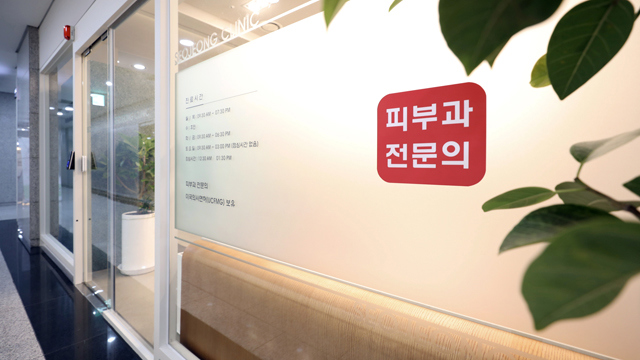
Whether the question is unwanted hair or an unwanted tattoo, the answer starts with an assessment of your skin and the target, because that is what sets the device, the settings, and the realistic number of sessions. SeoJeong Dermatology is at B-123, Lobby Floor, Acro Vista Arcade, 188 Seochojungang-ro, Seocho-gu, Seoul, South Korea. Opening hours are Monday and Thursday 09:30–19:30, Tuesday and Friday 09:30–18:30, and Saturday 09:30–15:00, with a lunch break from 12:30 to 13:30 Monday to Friday; the clinic is closed on Wednesday and Sunday. To arrange a consultation, call +82-2-533-9300 or email info@seojeongclinic.com.
Disclaimer
This page is for general information only and is not a substitute for individual medical advice, diagnosis, or treatment. Outcomes vary between individuals, and no specific result is guaranteed. Please consult a qualified medical professional about your own circumstances.
Sources & Further Reading
DermNet New Zealand — Hair removal techniques: temporary removal, temporary reduction, and permanent removal methods
DermNet — Alexandrite laser treatment — photothermolysis, hair removal by skin and hair type, Q-switched tattoo removal, and side effects
NHS — Before you have a cosmetic procedure — risks and choosing a practitioner
NHS — Cosmetic surgery abroad — aftercare, follow-up and language when treated outside your home country
Related Services
Procedures available within our clinical departments.

Acne Care & Extraction
Acne care and extraction in Seoul is a non-surgical skin-care service addressing clogged pores, blackheads, whiteheads and selected acne lesions.
Learn More

3DEEP Needle RF
3DEEP Needle RF in Seoul is a radiofrequency-based treatment that delivers energy into targeted skin layers using a specialised device.
Learn More

Acne Laser & Light Therapy
Acne laser and light therapy in Seoul uses selected laser or light-based devices to help manage certain types of acne.
Learn More