Personalized Medical Care & Dedicated International Patient Concierge


Skin Boosters & Rejuvenation · Needs Clinic Confirmation
PRP Platelet-Rich Plasma Therapy
PRP platelet-rich plasma therapy in Seoul uses a concentrated portion of the patient's own blood containing platelets and associated growth factors.
Schedule a ConsultationPRP Platelet-Rich Plasma Therapy
Medically reviewed by Dr. Lee Jiyoung, Board-Certified Dermatologist
PRP platelet-rich plasma therapy in Seoul uses a concentrated portion of the patient's own blood containing platelets and associated growth factors. At SeoJeong Dermatology in Seocho-gu, a blood sample is collected and processed to prepare PRP, which is then injected or applied to the intended treatment area depending on the indication.
What Is PRP Platelet-Rich Plasma Therapy?
PRP is prepared from the patient rather than from a product. Blood is drawn, processed to concentrate the platelet-rich portion, and returned to the treatment area.
The preparation is autologous: it comes from the patient's own body.
It may be used in selected aesthetic, hair restoration and musculoskeletal treatments.
A session commonly takes approximately 30 to 60 minutes including preparation and treatment, varying by area and protocol.
Some patients have a single session; others may be advised to have multiple sessions spaced over several weeks.
Benefits may be temporary, and maintenance sessions may be discussed where appropriate.
DermNet defines platelet-rich plasma as an increased concentration of autologous platelets suspended in a small amount of plasma after centrifugation, used for injection into a wound or a particular skin condition. It sets out the numbers behind that description: blood normally consists of approximately 93 per cent red blood cells, 1 per cent white blood cells and 6 per cent platelets suspended in plasma, with a normal platelet count of 150,000 to 350,000 per microlitre; in platelet-rich plasma the red cell count is lowered while the platelet proportion is raised to around 94 per cent, three to eight-fold greater than normal.
The rationale is the content of the platelets themselves. DermNet notes that platelets are probably best known as components of the blood clotting system, but that every platelet is also a biochemical storehouse of regulatory, signalling and growth-factor molecules that participate in the recovery and healing of tissue in response to injury. It lists the associated growth factors — platelet-derived growth factor, transforming growth factor-beta, vascular endothelial growth factor, epidermal growth factor, fibroblast growth factor-2 and insulin-like growth factor among them — and describes how they aid healing by attracting undifferentiated stem cells into the newly formed matrix and triggering cell division, suppressing cytokine release and limiting inflammation, attracting macrophages, and promoting new capillary growth and epithelialisation.
One property follows directly from the preparation being the patient's own. DermNet states that as an autologous preparation PRP is safer to use than allogenic or homologous preparations and is free from concerns over transmissible diseases such as HIV, hepatitis, West Nile fever and Creutzfeldt-Jakob disease, and that it requires no special considerations regarding antibody formation.
Who Performs PRP Platelet-Rich Plasma Therapy at SeoJeong Dermatology
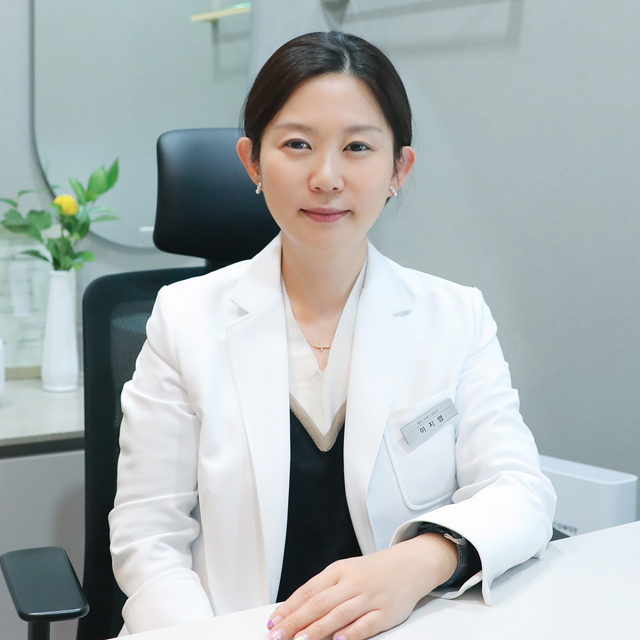
Dr. Lee Jiyoung
Board-certified Dermatologist
Assessment and treatment are carried out by Dr. Lee Jiyoung, Chief Director of SeoJeong Dermatology and a board-certified dermatologist in South Korea with more than 20 years of clinical experience. Her medical education and her dermatology specialist training were both completed in South Korea, and she holds an ECFMG certificate.
The consultation reviews medical history, medications, symptoms, treatment goals and previous procedures. The intended treatment area is examined, and additional investigations may be recommended where clinically necessary. Medications are reviewed with particular care here, because anticoagulation is a documented contraindication rather than a caution.
Before establishing the clinic in April 2022, she was Director at Cheongdam Lee Ji-ham Dermatology Clinic, at B&C Dermatology Clinic's Gangnam branch, and at CU Cleanup Dermatology Clinic's Yeongdeungpo branch. She is a regular member of the Korean Dermatological Association, the Korean Association of Dermatologists, the Korean Academy of Anti-Aging Dermatology, the Korean Acne Society, and the Korean Atopic Dermatitis Association. SeoJeong Dermatology is a single-physician clinic, and a dedicated global coordinator supports international patients with English-language communication.
Treatment is carried out under the direction of Dr. Lee Jiyoung; this page does not claim that one specific doctor personally performs every session of this service.
Who Is a Good Candidate for PRP Platelet-Rich Plasma Therapy?
Suitable candidates depend on the treatment goal, and may include:
Individuals with certain types of hair thinning.
Individuals with selected skin-quality concerns.
Individuals with specific musculoskeletal conditions for which PRP is considered appropriate.
PRP may be unsuitable, or require postponement, for people with:
Certain blood or platelet disorders.
Significantly low platelet counts.
Active infections.
Some cancers.
Other conditions that affect treatment safety.
DermNet lists the medical conditions that contraindicate the use of PRP as critical thrombocytopenia, hypofibrinogenaemia, haemodynamic instability, sepsis, acute and chronic infections, chronic liver disease, and anticoagulation therapy with warfarin, dabigatran or heparin. Several of those are not obvious to a patient from the outside, which is why the history is taken in detail rather than by questionnaire.
What to Expect: Procedure, Recovery, and Results Timeline
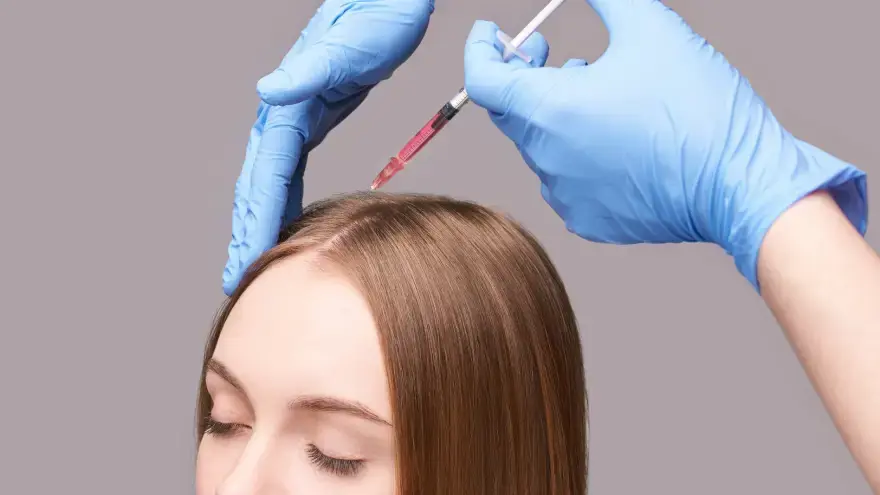
The session follows five steps. The treatment area and medical history are assessed. A blood sample is collected from the patient. The sample is processed, commonly using a centrifuge, to separate and concentrate the platelet-rich portion. The prepared PRP is injected or applied to the planned treatment area using an appropriate technique. Aftercare instructions are provided, and follow-up arranged when needed.
The processing step is more exacting than it appears. DermNet notes that the tubes are spun using a carefully determined protocol, and that the speed and duration of centrifugation are very important to ensure the platelets are not damaged; blood plasma rich in platelets is then drawn off from the appropriate level, and an activating agent such as calcium chloride may be added to activate the platelets and release their content prior to use.
PRP preparation itself generally does not require anaesthesia, although blood collection may cause brief discomfort. Depending on the treatment area and technique, topical numbing cream, local anaesthesia or other appropriate pain-control measures may be used.
Stage | What happens |
|---|---|
Session length | Approximately 30 to 60 minutes, varying by area and protocol |
Sessions | One for some patients; multiple over several weeks for others |
Same day | Most patients resume routine light activities, depending on area and technique |
Several days | Temporary soreness, swelling or bruising may persist |
Weeks to months | Changes in skin quality or hair growth, when they occur, develop gradually |
More restrictive recovery instructions may apply to musculoskeletal injections or other specific applications, so the aftercare given at the appointment takes precedence over any general expectation.
Before treatment, inform the clinician about medical conditions, allergies, previous treatments, and all medications and supplements, and follow instructions regarding hydration, meals and medication review. Do not discontinue prescribed medicines without medical advice.
Afterwards, follow the clinic's instructions for cleaning and protecting the treated area, avoid unnecessary touching or manipulation of injection sites, and monitor for unusual symptoms. The clinician may recommend temporarily avoiding strenuous exercise, heat exposure or certain skincare products, depending on the treatment area.
On what is realistic, DermNet reports that case studies conducted in a number of countries have shown that patients with moderate wrinkling due to sun exposure or age can benefit from PRP treatment, and that when PRP is applied by superficial or deep dermal injection, skin texture, tone and firmness can improve within three weeks with ongoing improvements over the next few months. It also notes that the available data on wound healing are largely based on case series, which is a fair description of the strength of the evidence base rather than a dismissal of it.
Combining PRP Platelet-Rich Plasma Therapy with Other Treatments
DermNet notes that PRP injections are often used in conjunction with other treatments such as facelift, dermal implants and reconstructive procedures, and that for post-traumatic scars, PRP combined with centrifuged fat tissue and fractional laser resurfacing has been reported to improve the cosmetic appearance of scars.
At this clinic, whether and when PRP is combined with anything else is decided on assessment. Scar work is described under Acne Scar & Scar Treatment, and injectable volume options under Botox & Dermal Fillers.
Alternatives depend on the condition being treated. For hair loss, options may include evidence-based medications, other hair-restoration treatments, or hair transplantation where appropriate. For skin concerns, alternatives may include topical treatments, microneedling, laser treatments, or other clinician-selected procedures. Listing them by condition rather than by popularity is deliberate: PRP for hair thinning and PRP for skin quality are two different treatments that share a preparation method, and the comparison a patient should be making is against the other options for their own condition, not against PRP used for something else. DermNet also records that PRP has been reported to reinvigorate dormant hair follicles and stimulate new hair growth in male pattern alopecia, which is a statement about the category and about that indication specifically.
Safety, Precision, and Clinic Standards
The common side effects are temporary pain, tenderness, redness, swelling, bruising or minor bleeding at the collection or treatment site. Less common complications may include infection, nerve or tissue injury, or an inflammatory reaction.
Two points from the published guidance are worth stating directly. DermNet notes that PRP is immunologically neutral and poses no danger of allergy, hypersensitivity or foreign-body reactions — a genuine advantage of an autologous preparation. It also states that sterile technique must be used at every stage of PRP preparation and application, and that this is especially important if a patient has an underlying medical condition that predisposes to infection. A treatment that involves drawing, handling and reinjecting blood depends on that discipline rather than on the device.
The NHS states that all cosmetic procedures carry some risk, whether surgical or non-surgical, and that they can lead to serious complications if not done correctly. Its advice is to choose a reputable, safe and qualified practitioner trained and experienced in the procedure you are having, and to ask about the procedure, the products used, and what could go wrong.
At SeoJeong Dermatology, treatment planning is carried out by a Korean board-certified dermatologist, each patient receives an individual skin assessment to select treatments suited to their needs, and consultation precedes the selection of any procedure. The clinic is a Registered Medical Institution for Attracting Foreign Patients, certified by the Ministry of Health and Welfare in compliance with the Medical Overseas Expansion and Foreign Patients Attraction Act; its business registration number is 342-17-01916.
NHS guidance on having cosmetic treatment abroad advises finding out what happens if there are complications, where follow-up appointments will be, and how easily you could travel back to the destination where you were treated. It notes that overseas clinics may not provide follow-up treatment to the same standard, and advises asking whether the practitioner speaks a language you understand, since they need to be able to explain the procedure and understand your concerns.
The Bottom Line
PRP is made from the patient's own blood, concentrated by centrifugation and returned to the treatment area.
Being autologous, it carries no risk of allergy, hypersensitivity or foreign-body reaction.
Low platelet counts, active infection, chronic liver disease and anticoagulation therapy are contraindications.
Changes in skin quality or hair growth, where they occur, develop over weeks to months rather than immediately.
Benefits may be temporary, and maintenance sessions are discussed where appropriate.
Frequently Asked Questions
Where does the material injected come from?
From the patient. Blood is drawn, processed in a centrifuge to concentrate the platelet-rich portion, and that preparation is then injected or applied to the treatment area.
Can I be allergic to it?
PRP is immunologically neutral and poses no danger of allergy, hypersensitivity or foreign-body reactions, because it is derived from the patient's own blood.
How long does a session take?
Approximately 30 to 60 minutes including preparation and treatment, though the duration varies by treatment area and protocol.
Is it painful?
The preparation itself generally does not require anaesthesia, although blood collection may cause brief discomfort. Topical numbing cream, local anaesthesia or other pain-control measures may be used depending on the area and technique.
How soon would I notice anything?
Changes in skin quality or hair growth, when they occur, generally develop gradually over weeks to months rather than immediately.
Who should not have PRP?
People with certain blood or platelet disorders, significantly low platelet counts, active infections, some cancers, chronic liver disease, or who are taking anticoagulation therapy. Several of these need to be identified from the medical history rather than assumed.
Will I need more than one session?
Some patients undergo a single session, while others may be advised to have multiple sessions spaced over several weeks, depending on the indication.
Can I have the consultation in English?
Yes. International patients receive consultations in English at SeoJeong Dermatology, supported by a dedicated global coordinator who handles English-language communication and consultation arrangements.
Book a Consultation at SeoJeong Dermatology
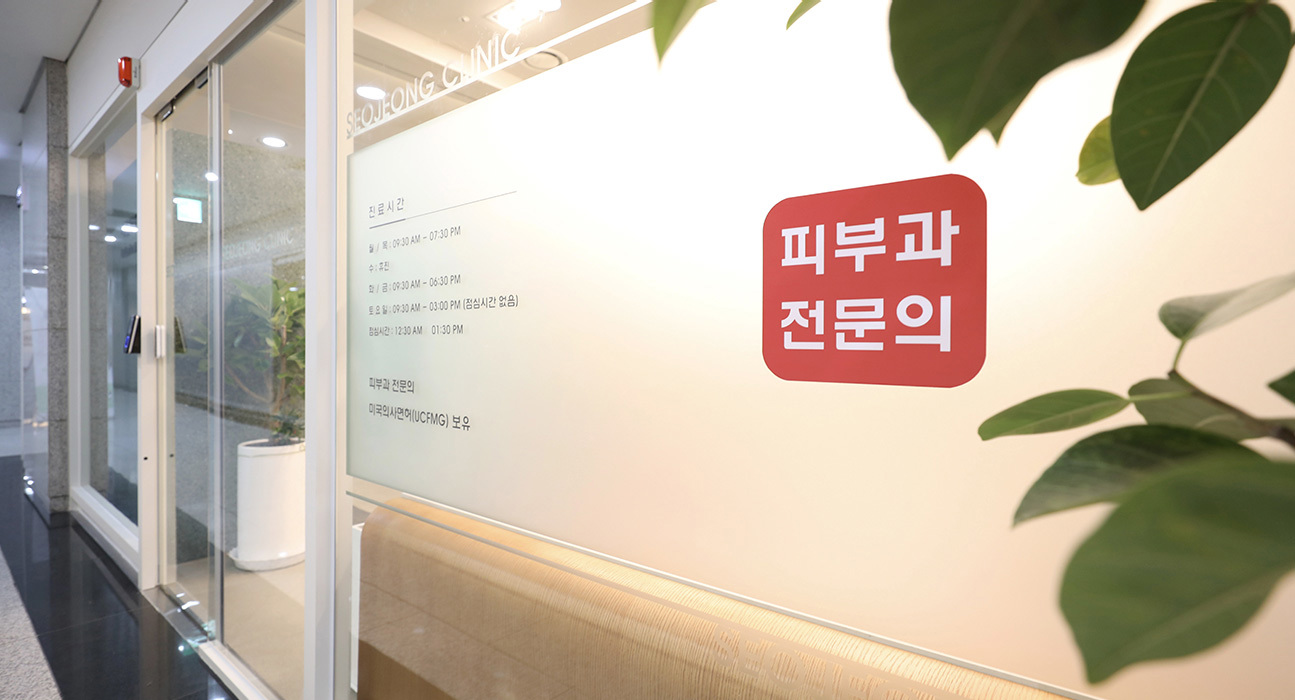
Because PRP is used for several different indications, the consultation starts by establishing which one applies and whether the medical history allows it. SeoJeong Dermatology is at B-123, Lobby Floor, Acro Vista Arcade, 188 Seochojungang-ro, Seocho-gu, Seoul, South Korea. Opening hours are Monday and Thursday 09:30–19:30, Tuesday and Friday 09:30–18:30, and Saturday 09:30–15:00, with a lunch break from 12:30 to 13:30 Monday to Friday; the clinic is closed on Wednesday and Sunday. To arrange a consultation, use the contact page, call +82-2-533-9300, or email info@seojeongclinic.com.
Incheon International Airport is roughly 11 to 13 hours' non-stop flight from the US West Coast and 14 to 16 hours from the East Coast, with departure hubs including Los Angeles, San Francisco, Seattle, New York, Chicago, and Atlanta; Seocho-gu is reached from Incheon by airport limousine, taxi, or public transport. Arriving at least one day before the appointment allows time for travel recovery and the consultation. Korea Standard Time is UTC+9. US citizens are currently exempt from K-ETA only until 31 December 2026, which may change from 1 January 2027, and a digital e-Arrival Card has been mandatory for every entry since 1 January 2026.
Disclaimer
This page is for general information only and is not a substitute for individual medical advice, diagnosis, or treatment. Outcomes vary between individuals, and no specific result is guaranteed. Please consult a qualified medical professional about your own circumstances.
Sources & Further Reading
DermNet — Platelet-rich plasma — the definition and composition of PRP, how it is collected and centrifuged, the growth factors involved, documented indications, contraindications, immunological neutrality, and the case-series basis of the evidence
NHS — Before you have a cosmetic procedure — risks of surgical and non-surgical procedures, and choosing a practitioner
NHS — Cosmetic surgery abroad — complications, follow-up and language when treated outside your home country
Other Services
Explore additional treatments offered by our specialists.

Wart & Corn Cryotherapy
Wart and corn cryotherapy in Seoul is a treatment at SeoJeong Dermatology in Seocho-gu that uses an extremely cold substance, usually liquid nitrogen, to destroy wart tissue.
Learn More

Thermage Skin Tightening
Thermage skin tightening in Seoul is a non-surgical treatment that uses radiofrequency energy to heat deeper skin tissue and support collagen remodeling.
Learn More
Re2O Skin Booster
Re2O skin booster in Seoul is a skin booster based on human-derived acellular dermal matrix, used in aesthetic treatments intended to improve skin texture and firmness.
Learn More