Personalized Medical Care & Dedicated International Patient Concierge

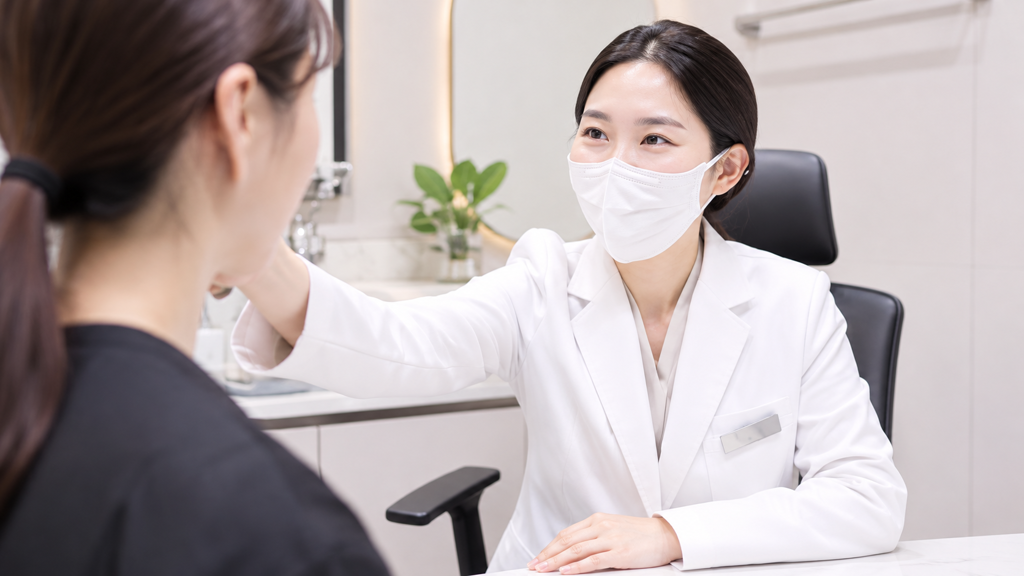
Medical Guide
Dr. Lee Jiyoung: Board-Certified Seoul Dermatologist
Credentials you can check: Korean board certification, an ECFMG certificate, 20+ years in practice, five society memberships and three prior director roles.
Schedule a ConsultationDr. Lee Jiyoung: Board-Certified Seoul Dermatologist
Medically reviewed by: Dr. Lee Jiyoung, Board-Certified Dermatologist
Searching for a dermatologist in Seoul from the United States produces a great deal of ranking and very little evidence. Lists of recommended clinics rarely name the physician who would treat you, and almost never state what their qualifications are in terms you could verify. This page takes the opposite approach for SeoJeong Dermatology. It sets out what the clinic has published about Dr. Lee Jiyoung, explains what each credential actually certifies, and marks clearly where the record stops.
The short version
Dr. Lee Jiyoung is the Chief Director of SeoJeong Dermatology in Seocho-gu, Seoul, and a board-certified dermatologist in South Korea with more than 20 years of clinical experience. She completed her medical education and her dermatology specialist training in South Korea and holds an ECFMG certificate. Her stated areas of focus are lifting, anti-aging, acne, scar treatment, pigmentation and redness.
She is also the clinic's only physician. SeoJeong Dermatology operates as a single-physician practice in which Dr. Lee personally provides the consultations and the treatments, supported by one dedicated coordinator for international patients.
Credential by credential, and what each one means
A credential is only useful if you know what it certifies. Four appear in the clinic's published material, and they do different jobs.
Board certification in dermatology, South Korea
This is the central one. Board certification indicates that a physician completed specialist training in a defined field and passed the examination for it. In Dr. Lee's case the field is dermatology and the training was completed in Korea.
What it tells you is the body of training behind the assessment you will receive. That matters most at the moment a dermatologist declines to treat something, or treats something differently than you expected, because that judgment comes from the training rather than from the device menu. What board certification does not tell you is how many times any particular procedure has been performed, which is a separate question and one addressed below.
The ECFMG certificate
The Educational Commission for Foreign Medical Graduates certifies that a physician who trained outside the United States has met defined standards for entry into US graduate medical education, including verification of the medical school credential itself.
For a US patient the useful part is narrow but real: it means a US-based organization has verified the primary medical qualification. It is not a US medical license, it does not authorize practice in the United States, and the clinic does not claim that it does. Read it as independent verification of the degree rather than as a US practice credential.
Dermatology specialist training completed in Korea
The clinic states that Dr. Lee completed dermatology specialist training in Korea. This is the residency pathway that sits underneath the board certification, and the two statements are consistent with each other.
More than 20 years of clinical experience
Dr. Lee Jiyoung
Board-certified Dermatologist
The clinic publishes this as a figure for years in practice. It is a duration, not a volume. A patient who wants to know how often a specific procedure is performed is asking a different question, and that answer is not published.
Society memberships
SeoJeong Dermatology lists five regular memberships for Dr. Lee:
- Korean Dermatological Association
- Korean Association of Dermatologists
- Korean Academy of Anti-Aging Dermatology
- Korean Acne Society
- Korean Atopic Dermatitis Association
Memberships are worth reading for what they indicate rather than for how many there are. Two of these five are general dermatology bodies. The other three are narrower: anti-aging dermatology, acne, and atopic dermatitis. That pattern lines up with the stated areas of focus, and the overlap between the two lists is a reasonable consistency check for any physician profile.
A caution that applies to every clinic, not only this one: membership of a professional society is ordinarily a matter of joining and remaining in good standing. It is a signal of engagement with a field. It is not an assessment of individual skill, and it should not be read as one.
Prior director roles
Before she opened SeoJeong Dermatology, Dr. Lee served as a director at three Seoul dermatology clinics:
- Cheongdam Lee Ji-ham Dermatology Clinic
- B&C Dermatology Clinic, Gangnam Branch
- CU Cleanup Dermatology Clinic, Yeongdeungpo Branch
Three directorships across three districts of Seoul is the kind of detail that is checkable in principle, and that is the main reason it is worth publishing. A career history naming specific institutions can be corroborated; a career described only as extensive cannot.
The clinic she built
SeoJeong Dermatology was established in April 2022 in Seocho-gu, Seoul. Its stated philosophy is to guide patients toward treatments suited to their individual needs rather than recommending the same procedures to everyone.
That sentence is easy to skim past, so it is worth converting into something observable. In a single-physician clinic, the person who assesses you is the person who treats you and the person who sees you afterward. There is no handoff between a consultant and an operator, which removes one common source of confusion for international patients: not knowing who will actually be holding the device.
The practical trade-off is capacity rather than quality. One physician has one schedule, which is a reason to arrange appointments well before you fly rather than on arrival.
The clinic is registered as a Medical Institution for Attracting Foreign Patients, certified by the Ministry of Health and Welfare under Korea's framework for foreign patient services, and publishes its business registration no. 342-17-01916. Both are institutional facts rather than statements about any individual physician, and neither substitutes for the credentials above.
The six stated areas of focus, and what they cover
A list of specializations is more informative when you know which services sit under each heading. Dr. Lee's six are lifting, anti-aging, acne, scar, pigmentation and redness, and the clinic's own service list maps onto them closely.
Lifting and anti-aging. The clinic groups skin lifting and tightening into one specialty and lists Thermage, Ulthera, LinearZ, 3DEEP, Trinity and Re-V among the technologies it uses for it. Botox and customized filler sit in a second group, and skin boosters including Rejuran and platelet-rich plasma therapy in a third.
Acne. Acne care and extraction, and acne laser and light therapy, are listed as a separate specialty from scar work, which is a meaningful distinction: treating active acne and treating what it left behind are different problems on different timelines.
Scar. Trifill scar subcision, scar and keloid injection, and Mirajet scar treatment are the three listed approaches.
Pigmentation and redness. Laser toning, Excel V pigment treatment, Er:YAG blemish removal, CO2 laser mole and growth removal and Excel V redness and vascular treatment make up this group.
Reading the lists this way is useful for one practical reason. If your concern falls squarely inside one of the six, you are asking about work the clinic places at the center of its practice. If it falls outside them, that is not a reason to look elsewhere, but it is a reason to ask explicitly how often the clinic handles it.
What personalized selection looks like in practice
The clinic's stated philosophy is to guide patients toward treatments suited to their individual needs rather than recommending the same procedures to everyone. Philosophies of that kind are easy to write and hard to verify, so it is worth asking what observable behavior would follow from it.
Four things, by the clinic's own description of its process. An individual skin assessment comes before any treatment is selected. Treatment planning is done by the board-certified dermatologist rather than delegated. A consultation precedes the choice of both procedures and skin-care treatments. And the assessment covers the specific concern you arrived with rather than a standard panel.
The honest test of all this is not whether a clinic says yes to what you asked for. It is whether it is willing to say that something you asked for is unnecessary, or that a simpler option would serve you better, or that nothing should be done today. A consultation that returns a shorter plan than the one you walked in with is evidence the philosophy is real. A consultation that only ever adds is evidence of something else.
That is also why the single-physician structure is relevant to more than scheduling. When assessment, treatment and follow-up sit with one person, the assessment carries consequences for that same person later, which is a quiet but genuine alignment of incentives.
What is not published, stated plainly
A profile that only lists strengths is not a profile. Nine items in the clinic's own doctor record remain unfilled, and several are ones patients commonly ask about:
- Procedure volume, at clinic or physician level
- Subspecialty technique expertise
- Academic publications and research
- Conference presentations
- Awards and recognitions
- Teaching and mentoring activity
- A stated personal treatment philosophy
- Approved physician quotations
- Referral policy and stated limitations
None of those absences is a warning sign on its own. A newer clinic has had less time to compile them, and some, such as awards, are of limited value even when present. But an honest page says where the record ends, and this is where it ends. If any of these matter to your decision, ask directly rather than inferring.
Verifying a Korean dermatologist from the United States
You cannot search a Korean specialty register the way you might check a state medical board at home, so the realistic method is to ask precise questions and compare the answers against what has already been published.
Five questions that do most of the work:
- Who performs the treatment, not just the consultation? At a single-physician clinic the answer should be simple and should be given without hesitation.
- What is the physician's specialty certification, and in what field?
- How many sessions is this likely to need, and what happens if it needs more?
- What would make you advise against treating me? A physician who can answer this readily is describing real clinical judgment.
- Who sees me afterward, and through what channel once I am home?
Then compare. The published record says board-certified dermatologist, more than 20 years in practice, specialist training in Korea, ECFMG certificate, five memberships and three prior directorships. If anything you are told in person differs from that, the difference is worth asking about directly. Mismatches are usually mundane, but they are easier to resolve before a treatment than after one.
The clinic's own profile page for Dr. Lee Jiyoung is the place to compare what you have been told against what has been published, and the clinic's about page gives the institutional background alongside it.
What the credentials cannot tell you
Three things, and it is worth being blunt about them.
Whether a treatment is right for you. That requires examining your skin. Credentials describe the examiner, not the finding.
What your result will be. Individual outcomes vary across every treatment the clinic offers, and no qualification changes that.
How a clinic behaves when something is difficult. The most informative question you can ask is not about certificates but about what happens when a result is disappointing or a side effect appears after you have flown home. The published record cannot answer that; a direct conversation can.
For international patients specifically
English-language support at SeoJeong Dermatology runs through one dedicated international patient coordinator, Jeong Yoon Seo, available during regular clinic hours in Korea Standard Time. Translated documents are available, and the clinic directs post-treatment questions to its own contact channel.
The clinic's hours are Monday and Thursday 09:30 to 19:30, Tuesday and Friday 09:30 to 18:30, Saturday 09:30 to 15:00, with a lunch break from 12:30 to 13:30 on weekdays. It is closed on Wednesday and Sunday. Seoul runs nine hours ahead of Coordinated Universal Time and Korea does not change its clocks for summer, so a question sent during a US working day will usually be answered while you sleep. Begin correspondence earlier than feels necessary.
One scheduling detail deserves attention because it is unusual: this clinic closes on Wednesday as well as Sunday. A short trip planned around a mid-week appointment can lose a day to that closure if nobody checks.
The Bottom Line
- Dr. Lee Jiyoung is the Chief Director of SeoJeong Dermatology and a board-certified dermatologist in South Korea with more than 20 years of clinical experience.
- She completed medical education and dermatology specialist training in South Korea and holds an ECFMG certificate, which verifies the medical degree but is not a US license.
- She holds five regular society memberships and previously served as a director at three Seoul dermatology clinics.
- The clinic is a single-physician practice, so the physician who consults is the physician who treats.
- Procedure volume, publications, awards and a stated referral policy are not published; ask directly if they matter to your decision.
Frequently Asked Questions
Is Korean board certification equivalent to US board certification?
The two systems are separate, each with its own training pathway and examination, so neither substitutes for the other. What certification indicates in both countries is completed specialist training and a passed specialty examination in that field. The American Academy of Dermatology's guidance on choosing a provider for cosmetic treatment makes the same underlying point: establish the training behind the person treating you rather than relying on the setting.
What does the ECFMG certificate actually mean?
It indicates that a physician trained outside the United States has met defined standards for entry into US graduate medical education, including verification of the medical school credential. It is independent verification of the degree. It does not authorize practice in the United States and the clinic does not present it as doing so.
Will Dr. Lee personally perform my treatment?
The clinic describes itself as a single-physician practice in which Dr. Lee personally provides consultations and treatments. Confirm it in writing for your specific appointment anyway, since that written answer is useful if anything later differs from what you expected.
How many procedures has she performed?
The clinic does not publish procedure volume at physician or clinic level. If a number matters to your decision, ask for it directly and ask what the figure counts, because volume is defined differently from clinic to clinic.
Does she have published research or awards?
Those fields are not filled in the clinic's published record, along with conference presentations and teaching activity. Their absence is not evidence either way; it simply means the information has not been made public.
What does the clinic's registration for foreign patients cover?
It records the institution's standing to receive international patients under Korea's framework, certified by the Ministry of Health and Welfare. It describes the clinic, not the physician, and it is separate from specialty certification.
How do I reach the clinic before I travel?
Through its own contact channel, where one English-speaking coordinator handles international enquiries during Korean clinic hours. Allow a full working day for each exchange, and remember the Wednesday and Sunday closures when proposing dates.
What should I ask that a credentials page cannot answer?
Ask what would make the physician advise against treating you, and ask what happens if a side effect appears after you return home. Those two answers tell you more about how a clinic practices than any list of qualifications, because both require the physician to describe a situation that is inconvenient for them rather than one that is flattering. A credential list is assembled once and never revised; a straight answer about a bad week is produced on the spot, and it is the better predictor of how you will be treated when something is not going to plan.
This article is for general informational purposes only and is not individualized medical advice or a tool for self-diagnosis. Whether any treatment described here suits you can only be decided by a board-certified dermatologist who examines you in person, and individual results vary.
More Articles
Continue reading our clinical guides.
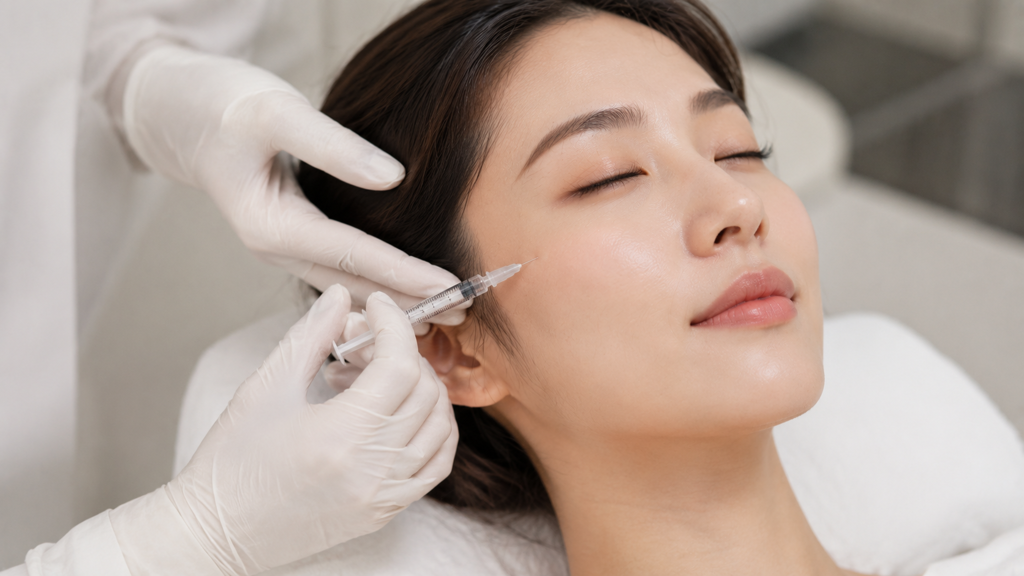
Risks, Side Effects and Who Should Not Be Treated
A risk-first guide to lifting, injectables and lasers in Seoul: the hard stops, the conditions that mean postponement, and the symptoms that need a call today.
Learn More
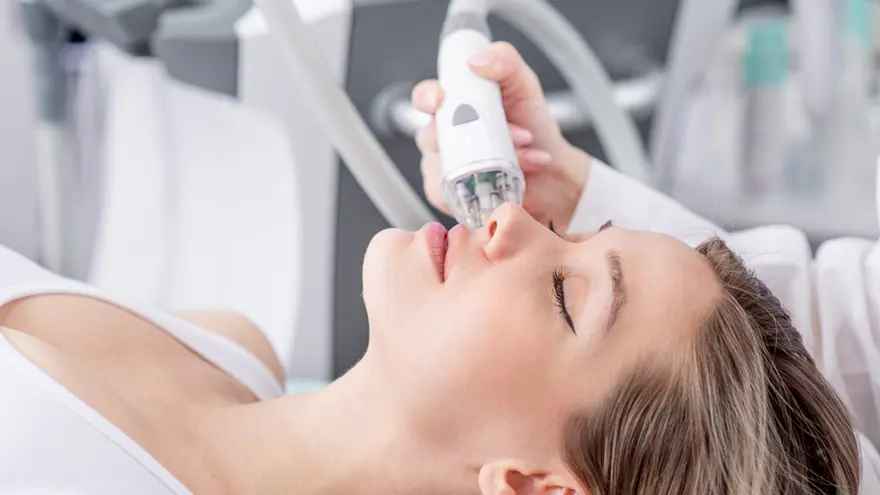
How SeoJeong Dermatology Documents Device Authenticity
Five brand authenticity plaques, 23 listed devices and named manufacturers. What that documents, what it does not, and how to check any Korean clinic yourself.
Learn More
Dr. Lee Jiyoung: Board-Certified Seoul Dermatologist
Credentials you can check: Korean board certification, an ECFMG certificate, 20+ years in practice, five society memberships and three prior director roles.
Learn More