Personalized Medical Care & Dedicated International Patient Concierge


Skin Boosters & Rejuvenation · Needs Clinic Confirmation
Trifill Skin Booster
Trifill skin booster in Seoul uses Trifill PRO, a device that delivers carbon dioxide gas to separate adhered skin tissue and create air pockets into which a treatment solution is injected.
Schedule a ConsultationTrifill Skin Booster
Medically reviewed by Dr. Lee Jiyoung, Board-Certified Dermatologist
Trifill skin booster in Seoul uses Trifill PRO, a device that delivers carbon dioxide gas to separate adhered skin tissue and create air pockets into which a treatment solution is injected. It is offered at SeoJeong Dermatology in Seocho-gu for patients concerned with skin texture, hydration or overall skin quality.
What Is Trifill Skin Booster?
Trifill PRO is described as using CO₂ gas to separate adhered skin tissue and create air pockets for solution delivery. The gas does the separating; the solution is what is then placed into the space created.
The device is Trifill PRO.
The mechanism has two parts: CO₂-assisted separation of adhered tissue, then delivery of a treatment solution.
The procedure may take approximately 30 to 60 minutes, including preparation and topical numbing.
Depending on the solution used and the individual's skin condition, treatment may aim to improve hydration, skin texture, or the appearance of skin quality.
The idea of releasing tethered tissue is a recognised one in dermatology, and the clearest description of it comes from a related procedure. DermNet explains that fibrotic strands can tether depressed skin to the underlying tissue, and that breaking those strands, together with the new collagen deposition caused by wound healing, leads to cosmetic improvement. That is the general principle behind separating adhered tissue; what a given device does with it depends on the device and the solution.
Who Performs Trifill Skin Booster at SeoJeong Dermatology
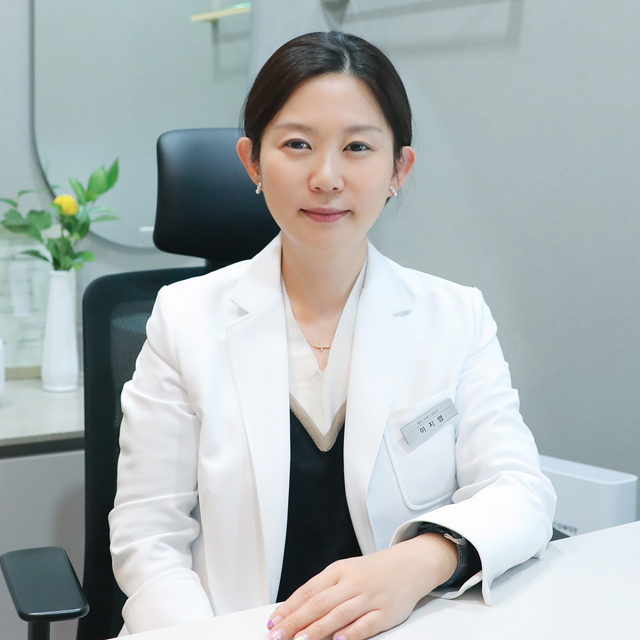
Dr. Lee Jiyoung
Board-certified Dermatologist
Assessment and treatment are carried out by Dr. Lee Jiyoung, Chief Director of SeoJeong Dermatology and a board-certified dermatologist in South Korea with more than 20 years of clinical experience. Her medical education and her dermatology specialist training were both completed in South Korea, and she holds an ECFMG certificate.
The doctor assesses the patient's skin, medical history, current medications, allergies and treatment goals. The treatment plan, the product selection, the expected recovery and the fees are discussed before proceeding — all four, and before rather than after, which matters particularly for patients who have travelled.
Before establishing the clinic in April 2022, she was Director at Cheongdam Lee Ji-ham Dermatology Clinic, at B&C Dermatology Clinic's Gangnam branch, and at CU Cleanup Dermatology Clinic's Yeongdeungpo branch. She is a regular member of the Korean Dermatological Association, the Korean Association of Dermatologists, the Korean Academy of Anti-Aging Dermatology, the Korean Acne Society, and the Korean Atopic Dermatitis Association. SeoJeong Dermatology is a single-physician clinic, and a dedicated global coordinator supports international patients with English-language communication.
Treatment is carried out under the direction of Dr. Lee Jiyoung; this page does not claim that one specific doctor personally performs every session of this service.
Who Is a Good Candidate for Trifill Skin Booster?
This treatment may suit:
Adults concerned about skin texture.
Adults concerned about skin hydration.
Adults concerned about overall skin quality.
Treatment may need to be postponed or avoided in the presence of:
Active skin infection.
Active inflammation.
Known allergy to the proposed ingredients.
Certain medical conditions.
The allergy question is specific to the solution rather than to the device, which is why it is asked once the solution has been selected rather than at the start of the conversation.
It is worth separating the two things a patient is agreeing to here, because they carry different considerations. The first is a delivery mechanism — gas-assisted separation of adhered tissue — which determines how the treatment feels, how the skin reacts in the following days, and which skin conditions in the area would make it unwise. The second is the solution that is placed, which determines what the treatment is actually for, what allergies matter, and what sort of change is plausible. A patient can be entirely suitable for the first and unsuitable for a particular version of the second, and the consultation checks them separately rather than as one decision. This is also why the question "what does this treatment do" has no single answer: the mechanism is fixed, and the answer follows the solution.
What to Expect: Procedure, Recovery, and Results Timeline
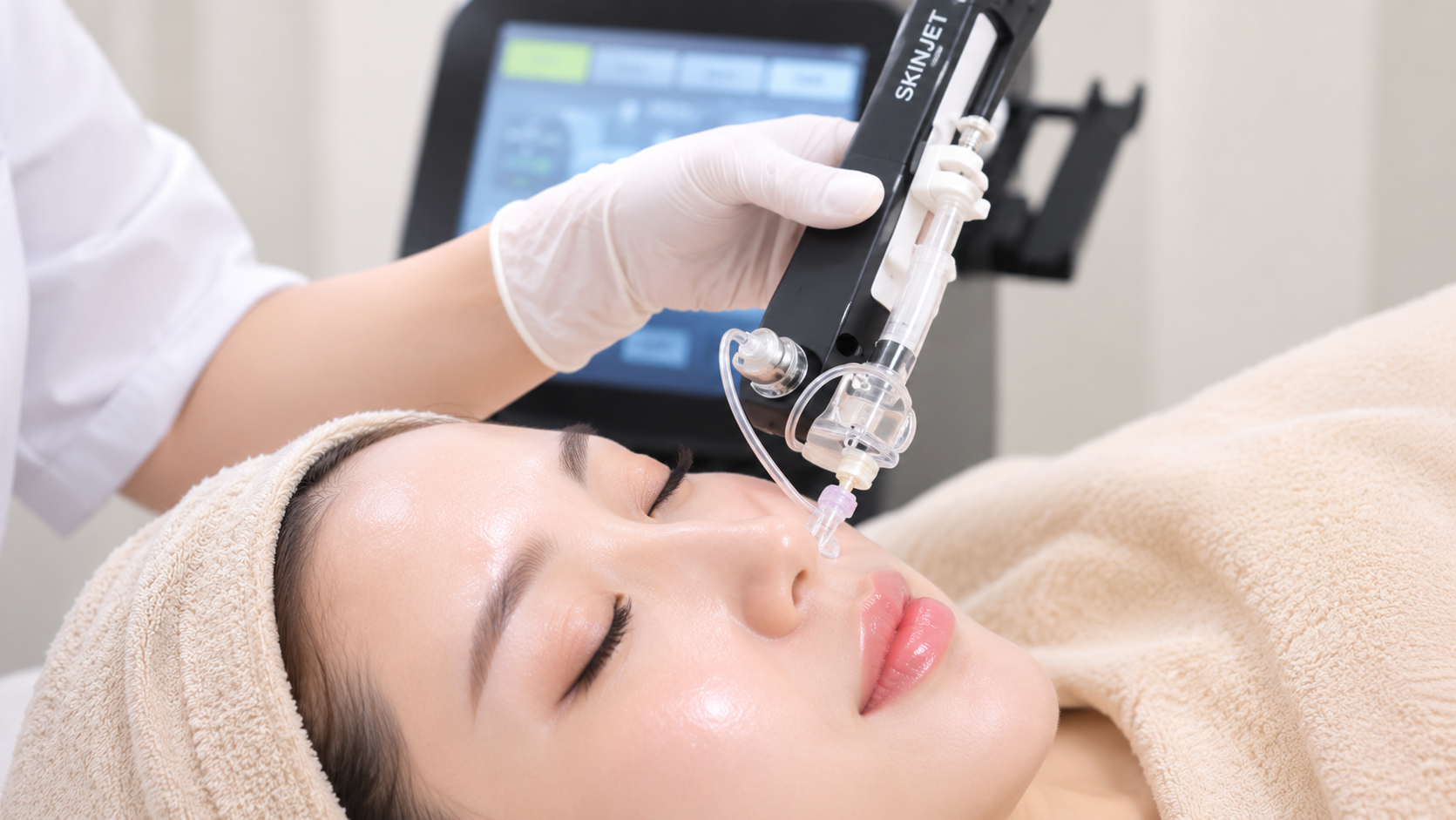
The session has five steps: consultation and skin assessment; selection of the treatment approach and solution; cleansing and preparation of the skin; application of the selected delivery technique; and post-treatment skin care with aftercare instructions.
Topical numbing or other pain-relief methods may be considered depending on the treatment plan.
Stage | What happens |
|---|---|
Session length | Approximately 30 to 60 minutes, including preparation and numbing |
Days 0 to 3 | Redness, swelling, tenderness or small raised areas may be noticeable |
Several days | These effects often improve, though bruising can last longer |
1 to 4 weeks | Initial hydration or texture changes may become noticeable |
4 to 8 weeks | Further changes may develop |
Results and duration vary with the treatment solution, the protocol and individual response, so the plan is reviewed against what actually happens rather than fixed in advance.
Before treatment, inform the doctor about medical conditions, allergies, medications, supplements and any active skin problems, and ask which skincare products or activities to avoid beforehand. Do not stop prescribed medication without medical advice.
Afterwards, follow the clinic's instructions for gentle cleansing, moisturising and sun protection. Avoid irritating skincare products and strenuous activity for the period advised by the treating doctor, and contact the clinic if symptoms worsen or unexpected effects occur.
Small raised areas in the first few days are a normal consequence of placing a solution into the skin, and they are not the result. Judging the treatment while they are still present is judging the delivery rather than the effect.
Combining Trifill Skin Booster with Other Treatments
This treatment may be combined with other skin treatments depending on individual skin concerns and the doctor's assessment. The clinic's wider range of injectable skin-quality treatments is set out on the Skin Boosters & Rejuvenation page, and resurfacing options under Pore & Skin Texture Treatment.
Depending on the patient's concerns, the documented alternatives are other skin boosters or non-injection skin treatments. That second category covers a lot of ground, from topical regimens to energy-based treatments, and it is a legitimate answer for a patient whose concern does not need an injectable at all.
For context on how combinations are generally sequenced in this area, DermNet notes that a tissue-releasing procedure can be effectively combined with topical retinoids, microneedling performed more than one day afterwards, acid peels, and fractional laser treatment — and the interval in that list is the instructive part. Treatments in this field are routinely combined, but with gaps rather than on the same day.
Safety, Precision, and Clinic Standards
The possible effects of skin-injection procedures are temporary redness, swelling, tenderness, bruising or small raised areas. Infection, allergic reactions and uneven results may also occur.
Uneven results deserve a note of their own. Where a treatment relies on separating tissue and placing a solution into the resulting space, the distribution of that solution is not perfectly uniform, and the outcome reflects both the technique and the skin's own response. This is one of the reasons a first session is sometimes deliberately conservative, and why a review before a second session is more useful than booking a course in advance.
The NHS states that all cosmetic procedures carry some risk, whether surgical or non-surgical, and that they can lead to serious complications if not done correctly. Its advice is to choose a reputable, safe and qualified practitioner trained and experienced in the procedure you are having, and to ask about the procedure, the products used, and what could go wrong.
At SeoJeong Dermatology, treatment planning is carried out by a Korean board-certified dermatologist, each patient receives an individual skin assessment to select treatments suited to their needs, and consultation precedes the selection of any procedure. The clinic is a Registered Medical Institution for Attracting Foreign Patients, certified by the Ministry of Health and Welfare in compliance with the Medical Overseas Expansion and Foreign Patients Attraction Act; its business registration number is 342-17-01916.
NHS guidance on having cosmetic treatment abroad advises finding out what happens if there are complications, where follow-up appointments will be, and how easily you could travel back to the destination where you were treated. It notes that overseas clinics may not provide follow-up treatment to the same standard, and advises asking whether the practitioner speaks a language you understand, since they need to be able to explain the procedure and understand your concerns.
The Bottom Line
Trifill PRO uses CO₂ gas to separate adhered skin tissue and create space for a treatment solution.
The aims are hydration, texture and the appearance of skin quality; no claim beyond that is made here.
A session takes roughly 30 to 60 minutes including preparation and numbing.
Redness and small raised areas settle over several days; bruising can take longer.
Changes may appear over one to four weeks, with further development to around eight weeks.
Frequently Asked Questions
What does the CO₂ gas actually do?
It separates adhered skin tissue and creates air pockets into which the treatment solution is injected. The gas is part of the delivery mechanism rather than the treatment itself.
How long does a session take?
Approximately 30 to 60 minutes, including preparation and topical numbing.
Is it painful?
Topical numbing or other pain-relief methods may be considered depending on the treatment plan. Discomfort varies between individuals and with the area treated.
What will the first few days look like?
Redness, swelling, tenderness or small raised areas may be noticeable in the first three days. These often improve over several days, while bruising can last longer.
When should I expect a change?
Initial hydration or texture changes may become noticeable within one to four weeks, with further changes potentially developing over four to eight weeks.
How long should I stay in Korea, and when can I fly home?
Plan to allow one to two days for the treatment and the initial recovery. Many patients can fly home within 24 to 48 hours after treatment, depending on their recovery and on any swelling or bruising. Results and duration vary with the treatment solution, the protocol and individual response, so the follow-up plan is agreed against the specific case rather than quoted as a fixed schedule.
Who should postpone treatment?
Anyone with an active skin infection or inflammation, a known allergy to the proposed ingredients, or certain medical conditions identified at assessment.
Can I have the consultation in English?
Yes. International patients receive consultations in English at SeoJeong Dermatology, supported by a dedicated global coordinator who handles English-language communication and consultation arrangements.
Book a Consultation at SeoJeong Dermatology
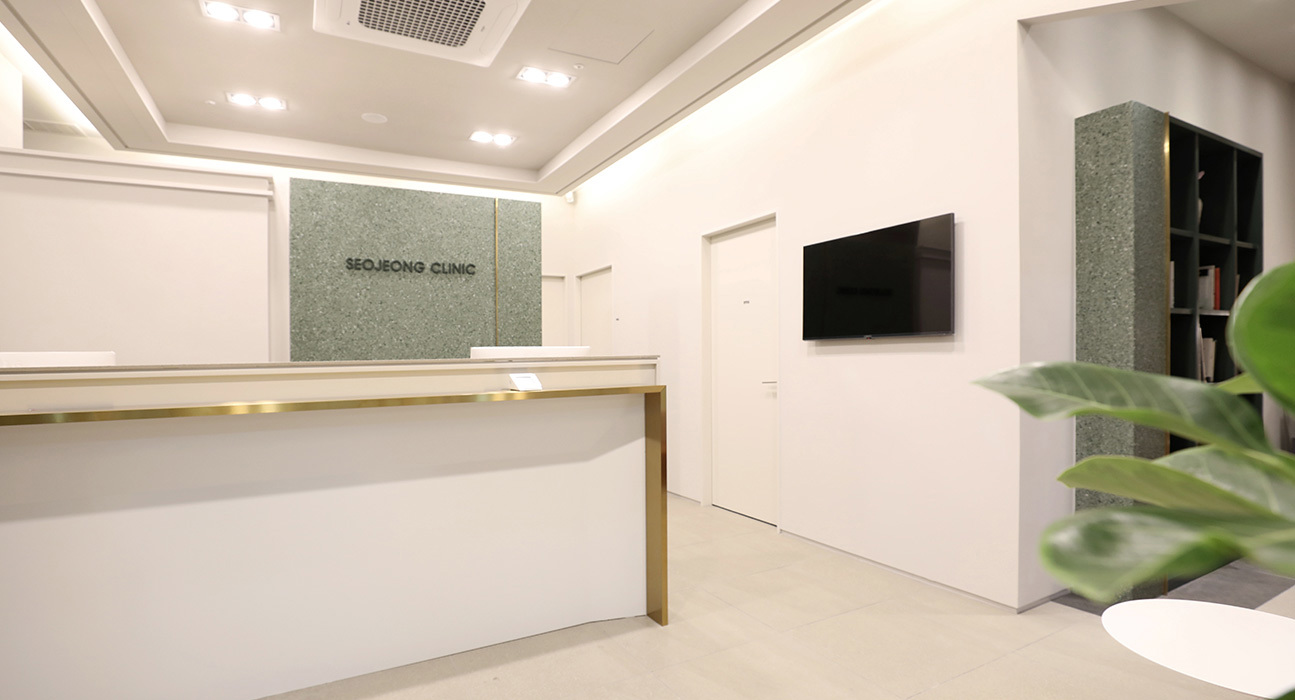
Because the solution matters as much as the device, the consultation settles both — and the fee alongside them — before anything is scheduled. SeoJeong Dermatology is at B-123, Lobby Floor, Acro Vista Arcade, 188 Seochojungang-ro, Seocho-gu, Seoul, South Korea. Opening hours are Monday and Thursday 09:30–19:30, Tuesday and Friday 09:30–18:30, and Saturday 09:30–15:00, with a lunch break from 12:30 to 13:30 Monday to Friday; the clinic is closed on Wednesday and Sunday. To arrange a consultation, call +82-2-533-9300 or email info@seojeongclinic.com.
Incheon International Airport is roughly 11 to 13 hours' non-stop flight from the US West Coast and 14 to 16 hours from the East Coast, with departure hubs including Los Angeles, San Francisco, Seattle, New York, Chicago, and Atlanta; Seocho-gu is reached from Incheon by airport limousine, taxi, or public transport. Arriving at least one day before the appointment allows time for travel recovery and the consultation. Korea Standard Time is UTC+9. US citizens are currently exempt from K-ETA only until 31 December 2026, which may change from 1 January 2027, and a digital e-Arrival Card has been mandatory for every entry since 1 January 2026.
Disclaimer
This page is for general information only and is not a substitute for individual medical advice, diagnosis, or treatment. Outcomes vary between individuals, and no specific result is guaranteed. Please consult a qualified medical professional about your own circumstances.
Sources & Further Reading
DermNet — Subcision — how fibrotic strands tether depressed skin, the role of new collagen deposition in improvement, and how tissue-releasing treatments are sequenced with other procedures
NHS — Before you have a cosmetic procedure — risks of surgical and non-surgical procedures, and choosing a practitioner
NHS — Cosmetic surgery abroad — complications, follow-up and language when treated outside your home country
Other Services
Explore additional treatments offered by our specialists.

Wart & Corn Cryotherapy
Wart and corn cryotherapy in Seoul is a treatment at SeoJeong Dermatology in Seocho-gu that uses an extremely cold substance, usually liquid nitrogen, to destroy wart tissue.
Learn More

Thermage Skin Tightening
Thermage skin tightening in Seoul is a non-surgical treatment that uses radiofrequency energy to heat deeper skin tissue and support collagen remodeling.
Learn More
Re2O Skin Booster
Re2O skin booster in Seoul is a skin booster based on human-derived acellular dermal matrix, used in aesthetic treatments intended to improve skin texture and firmness.
Learn More