Personalized Medical Care & Dedicated International Patient Concierge


Pigmentation & Redness Treatment · Needs Clinic Confirmation
Laser Toning
Laser toning in Seoul is a non-surgical treatment that uses controlled laser energy to target excess skin pigment. Low-fluence Q-switched Nd:YAG lasers, often at 1064 nm, have been studied for melasma and selected pigmentation concerns.
Schedule a ConsultationLaser Toning
Medically reviewed by Dr. Lee Jiyoung, Board-Certified Dermatologist
Laser toning in Seoul is a non-surgical treatment that uses controlled laser energy to target excess skin pigment. Low-fluence Q-switched Nd:YAG lasers, often at 1064 nm, have been studied for melasma and selected pigmentation concerns. It is offered at SeoJeong Dermatology in Seocho-gu; results vary, and pigmentation can return.
What Is Laser Toning?
Laser toning delivers low-fluence laser energy across an area rather than high energy to individual spots. The approach is gradual by design: repeated gentle passes over a course of sessions, instead of one aggressive treatment.
The wavelength most often used is 1064 nm from a Q-switched Nd:YAG laser.
Low fluence means lower energy per pulse than a spot-targeting treatment.
Each session takes 20 to 30 minutes.
No anaesthesia is required.
Sessions are typically scheduled seven to fourteen days apart.
The honest framing is in the last sentence of the summary above: results vary and pigmentation can return. Melasma in particular is a recurring condition rather than a one-off blemish, and a treatment plan that does not include ongoing sun protection is a plan to repeat the course.
The physics explains both why this works and why caution is needed. DermNet explains that melanin-specific, high-energy Q-switched laser systems can lighten or eradicate a variety of pigmented lesions by confining their energy to the melanosomes, the tiny granules containing melanin inside the pigment cells. It adds that the results depend on the depth of the melanin and the colour of the lesion and are to some degree unpredictable, that superficially located pigment is best treated with shorter wavelength lasers while deeper pigment requires longer wavelengths that penetrate further, and that successfully treated lesions may recur.
Two warnings from the same source apply directly to this treatment. The first is that caution is needed with laser therapy in skin of colour, as permanent hypopigmentation and depigmentation may occur. The second is that before any laser treatment of pigmented lesions, any lesion with atypical features should be biopsied to rule out malignancy — which is why assessment comes before treatment rather than alongside it.
Who Performs Laser Toning at SeoJeong Dermatology
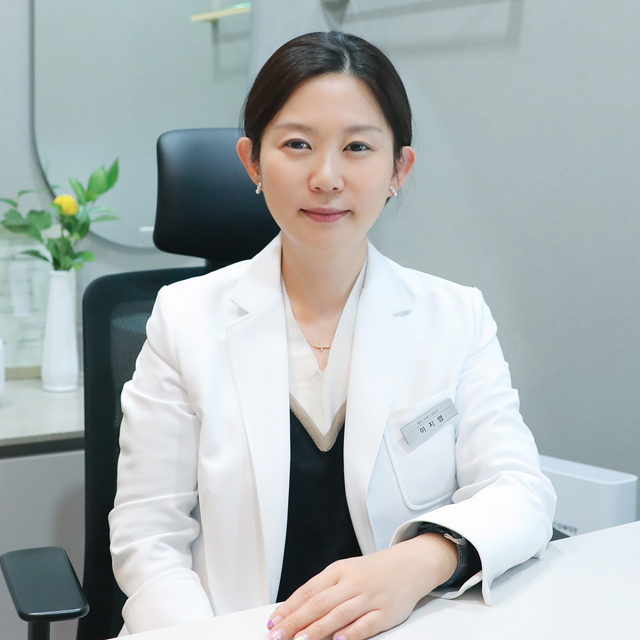
Dr. Lee Jiyoung
Board-certified Dermatologist
Assessment and treatment are carried out by Dr. Lee Jiyoung, Chief Director of SeoJeong Dermatology and a board-certified dermatologist in South Korea with more than 20 years of clinical experience. Her medical education and her dermatology specialist training were both completed in South Korea, and she holds an ECFMG certificate.
The assessment for this treatment begins with imaging rather than inspection. Markview 4-LED skin imaging is used to map pigment depth, followed by a one-to-one consultation covering medical history, medications, and prior laser history. Mapping depth matters because, as the guidance above notes, depth determines which wavelength is appropriate and how predictable the result will be.
Before establishing the clinic in April 2022, she was Director at Cheongdam Lee Ji-ham Dermatology Clinic, at B&C Dermatology Clinic's Gangnam branch, and at CU Cleanup Dermatology Clinic's Yeongdeungpo branch. She is a regular member of the Korean Dermatological Association, the Korean Association of Dermatologists, the Korean Academy of Anti-Aging Dermatology, the Korean Acne Society, and the Korean Atopic Dermatitis Association. SeoJeong Dermatology is a single-physician clinic, and a dedicated global coordinator supports international patients with English-language communication.
Treatment is carried out under the direction of Dr. Lee Jiyoung; this page does not claim that one specific doctor personally performs every session of this service.
Laser Toning Equipment and Alternatives
Three systems are used for this treatment at the clinic: Re Beam Pico, operating at 532 and 1064 nm; Discovery Pico from Quanta System; and Trinity toning from BLUECORE. Which is used depends on the pigment being treated.
If the concern is | The documented option |
|---|---|
Pigmentation together with redness | Excel V, which addresses both |
Mixed epidermal and dermal pigment | Laser toning combined with Pico toning |
Sensitive skin preferring a non-laser route | Iontophoresis, a gentler option |
Surface pigmentation, accepting more downtime | Chemical peels |
Each of those is a different proposition rather than a different brand of the same thing. The full range of pigment treatments is set out on the Pigmentation & Redness Treatment page.
Who Is a Good Candidate for Laser Toning?
This treatment may suit:
People with melasma.
People with sunspots.
People with other types of pigmentation who want a more even skin tone.
Suitability depends on the type of pigmentation, the skin tone, the medical history, and the risk of post-treatment pigment changes — four factors, and the last is the one patients rarely consider.
Treatment is not appropriate for:
Active inflammatory skin conditions, including a rosacea flare, eczema or active acne, which must be stabilised first.
Skin with active erythema or increased vascularity, which is a poor indicator for laser toning.
A history of skin-coloured tattooing in the treatment area, because of the risk of paradoxical darkening.
The third of those is specific and easily missed. Cosmetic tattooing that was intended to match skin tone can darken rather than lighten under a pigment-targeting laser, and it should be disclosed even if it was done years ago.
What to Expect: Procedure, Recovery, and Results Timeline
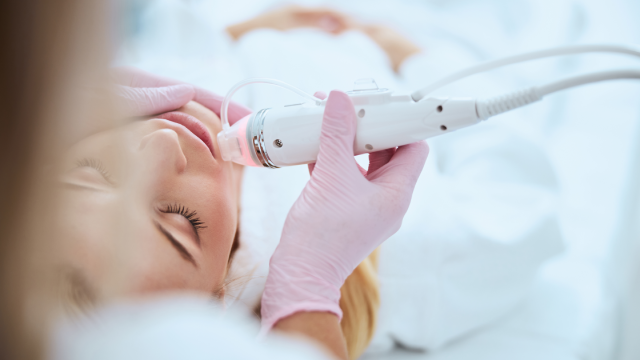
The session follows seven steps: skin consultation and assessment; cleansing of the treatment area; fitting of protective eyewear; selection of laser settings; delivery of laser energy to the targeted area; checking the skin afterwards; and aftercare and follow-up instructions.
No anaesthesia is required for this treatment.
Preparation starts well before the appointment and is unusually specific:
Stop retinoids and exfoliating acids four weeks before.
Avoid tanning and sunbeds two weeks before.
No peels or exfoliation one week before.
Stage | What happens |
|---|---|
Session length | 20 to 30 minutes |
Treatment day | Mild redness resolves within 1 to 2 hours; normal activity resumes immediately |
Days 1 to 3 | Skin may feel slightly sensitive; avoid direct sun and heavy makeup |
Days 7 to 14 | Next session typically scheduled |
Sessions 2 to 3 | Brightening becomes visible |
Sessions 5 to 8 | Clear pigmentation improvement for melasma, earlier for general dark spots |
Aftercare is where the result is protected or lost. Apply SPF50+ every morning without exception. Use a gentle fragrance-free cleanser and moisturiser for three to five days, and avoid retinoids and active acids for five to seven days.
Results last six to twelve months with consistent sun protection, and maintenance sessions every four to eight weeks are recommended for long-term upkeep, particularly for melasma. Sun protection is not a footnote to that: ultraviolet exposure is the main driver of recurrence, and a course of treatment followed by unprotected sun is a course spent twice.
Combining Laser Toning with Other Treatments
The clinic uses three combinations: Pico toning, for mixed epidermal and dermal pigment; Excel V, where pigmentation is accompanied by redness; and an Ionzyme vitamin C infusion after the laser session for added brightening.
Those pairings follow the logic of the problem rather than the appeal of a package. Mixed pigment sits at two depths and a single wavelength reaches one of them well; pigmentation with a vascular component involves two different chromophores; and a post-laser infusion is a separate step with a separate purpose.
None of these pairings has a published combined outcome. The order, the interval and whether a combination suits a particular patient are decided at the consultation against that patient's pigment map and skin type. A patient whose imaging shows pigment at a single depth may need none of these combinations, and being told so is a better outcome than being sold a longer course.
Safety, Precision, and Clinic Standards
Temporary redness, swelling and sensitivity may occur. Potential complications include burns, post-inflammatory hyperpigmentation, hypopigmentation, and mottled light spots.
Post-inflammatory hyperpigmentation deserves a note, because it is the complication patients find most disheartening: a treatment aimed at reducing pigment can, in the wrong circumstances, provoke more of it. That is the reason for stabilising inflammatory skin conditions first, for the four-week retinoid pause, and for the unconditional sun protection afterwards.
DermNet states plainly that laser treatments are burns, and lists the adverse effects that may occur as temporary pain, redness, bruising, blistering and crusting; infection, including reactivation of herpes simplex; pigment changes, brown and white marks, which may be permanent; and scarring. It also describes the safety precautions a laser service should have in place, including thorough training of personnel, eye protection for patient and staff, a warning notice outside the procedure room, non-reflective instruments, and avoidance of flammable materials.
The NHS states that all cosmetic procedures carry some risk, whether surgical or non-surgical, and that they can lead to serious complications if not done correctly. Its advice is to choose a reputable, safe and qualified practitioner trained and experienced in the procedure you are having, and to ask about the procedure, the products used, and what could go wrong.
At SeoJeong Dermatology, treatment planning is carried out by a Korean board-certified dermatologist, each patient receives an individual skin assessment to select treatments suited to their needs, and consultation precedes the selection of any procedure. The clinic is a Registered Medical Institution for Attracting Foreign Patients, certified by the Ministry of Health and Welfare in compliance with the Medical Overseas Expansion and Foreign Patients Attraction Act; its business registration number is 342-17-01916.
NHS guidance on having cosmetic treatment abroad advises finding out what happens if there are complications, where follow-up appointments will be, and how easily you could travel back to the destination where you were treated. It notes that overseas clinics may not provide follow-up treatment to the same standard, and advises asking whether the practitioner speaks a language you understand, since they need to be able to explain the procedure and understand your concerns.
The Bottom Line
Low-fluence Q-switched Nd:YAG energy is delivered across an area over a course of sessions rather than in one pass.
Pigment depth is mapped by imaging first, because depth decides what is realistic.
Active inflammation, active redness and skin-coloured cosmetic tattooing in the area all rule the treatment out for now.
Brightening appears from the second or third session; melasma usually needs five to eight.
Results last six to twelve months with consistent SPF50+, and melasma commonly recurs without it.
Frequently Asked Questions
How many sessions will I need?
Brightening is usually visible from the second to third session, with clear pigmentation improvement by the fifth to eighth session for melasma and earlier for general dark spots.
How far apart are sessions?
The next session is typically scheduled seven to fourteen days after the previous one, with maintenance every four to eight weeks for long-term upkeep.
How long should I stay in Korea, and when can I fly home?
International patients may plan for approximately one to three days for a consultation and an initial session, and many can fly home after one to three days. Because this treatment works as a course, multiple sessions may require additional visits or a longer stay, and how much of a course fits a single trip is worth settling at the consultation. No anaesthesia is required for the session itself, and mild redness usually resolves within one to two hours.
What do I need to stop before treatment?
Retinoids and exfoliating acids four weeks before, tanning and sunbeds two weeks before, and peels or exfoliation one week before.
Will the pigmentation come back?
It can. Results last six to twelve months with consistent sun protection, and melasma in particular may recur. Successfully treated pigmented lesions recurring is a documented outcome of laser treatment generally.
Why does my skin tone affect the plan?
Because caution is needed with laser therapy in skin of colour: permanent hypopigmentation and depigmentation may occur, so settings and expectations are adjusted accordingly.
I had cosmetic tattooing years ago — does that matter?
Yes. A history of skin-coloured tattooing in the treatment area carries a risk of paradoxical darkening and should be disclosed at consultation.
Can I have the consultation in English?
Yes. International patients receive consultations in English at SeoJeong Dermatology, supported by a dedicated global coordinator who handles English-language communication and consultation arrangements.
Book a Consultation at SeoJeong Dermatology
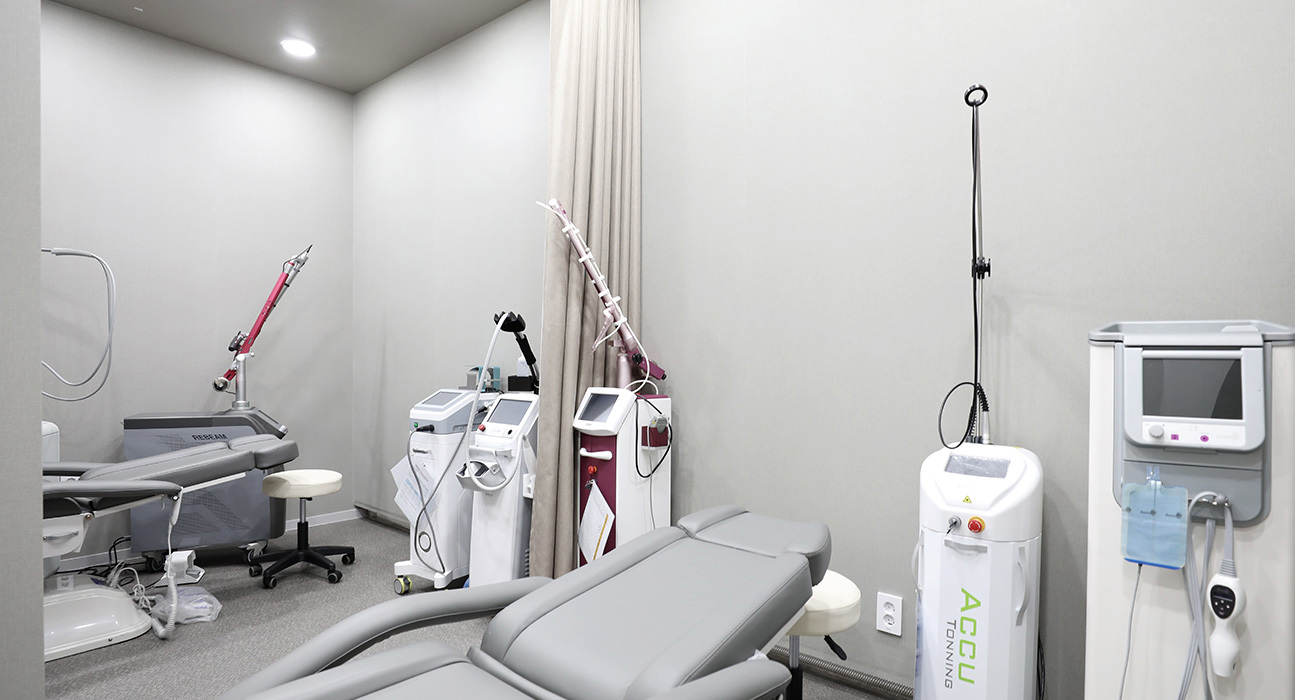
Pigment is mapped before it is treated, because depth and type decide both the wavelength and what a course can realistically achieve. SeoJeong Dermatology is at B-123, Lobby Floor, Acro Vista Arcade, 188 Seochojungang-ro, Seocho-gu, Seoul, South Korea. Opening hours are Monday and Thursday 09:30–19:30, Tuesday and Friday 09:30–18:30, and Saturday 09:30–15:00, with a lunch break from 12:30 to 13:30 Monday to Friday; the clinic is closed on Wednesday and Sunday. To arrange a consultation, call +82-2-533-9300 or email info@seojeongclinic.com.
Incheon International Airport is roughly 11 to 13 hours' non-stop flight from the US West Coast and 14 to 16 hours from the East Coast, with departure hubs including Los Angeles, San Francisco, Seattle, New York, Chicago, and Atlanta; Seocho-gu is reached from Incheon by airport limousine, taxi, or public transport. Arriving at least one day before the appointment allows time for travel recovery and the consultation. Korea Standard Time is UTC+9. US citizens are currently exempt from K-ETA only until 31 December 2026, which may change from 1 January 2027, and a digital e-Arrival Card has been mandatory for every entry since 1 January 2026.
Disclaimer
This page is for general information only and is not a substitute for individual medical advice, diagnosis, or treatment. Outcomes vary between individuals, and no specific result is guaranteed. Please consult a qualified medical professional about your own circumstances.
Sources & Further Reading
DermNet — Lasers in dermatology — how Q-switched systems target melanosomes, why depth and colour determine the result, caution in skin of colour, biopsy of atypical lesions before laser treatment, recurrence, laser-safety precautions and adverse effects
NHS — Before you have a cosmetic procedure — risks of surgical and non-surgical procedures, and choosing a practitioner
NHS — Cosmetic surgery abroad — complications, follow-up and language when treated outside your home country
Other Services
Explore additional treatments offered by our specialists.

Acne Care & Extraction
Acne care and extraction in Seoul is a non-surgical skin-care service addressing clogged pores, blackheads, whiteheads and selected acne lesions.
Learn More

3DEEP Needle RF
3DEEP Needle RF in Seoul is a radiofrequency-based treatment that delivers energy into targeted skin layers using a specialised device.
Learn More

Acne Laser & Light Therapy
Acne laser and light therapy in Seoul uses selected laser or light-based devices to help manage certain types of acne.
Learn More